
Sewer line repair and replacement, matched to the damage
Not every broken sewer line needs the same fix. Our sewer line repair and replacement work in Damascus, MD starts with a camera, then we pick the smallest repair that will actually last: a spot repair, a liner, or a new line when that is the only honest answer.
Signs the sewer line itself is damaged
A clog is in the pipe. Damage is to the pipe. These point to the second one.
- 01
Backups that return after cleaning
If the line was cleaned and it clogs again soon, something in the pipe keeps catching waste.
- 02
Sewage smell in the yard
A break lets sewer gas and waste into the soil around the line.
- 03
A soggy or sunken strip of lawn
Leaking wastewater softens the ground and washes soil into the pipe, so the surface sags.
- 04
Greener grass in a line across the yard
Grass over a leaking sewer gets fed. It often traces the path of the pipe.
- 05
Rodents or insects around the foundation
A broken lateral is an open door for them.
- 06
Cracks in a basement slab or foundation
Soil washed away by a leaking line can let concrete settle. It is worth ruling out.
Three kinds of fix, and how we choose
A sewer line can fail in one spot or along its whole length, and the right repair depends on which. That is the whole idea behind this page: find out what is wrong first, then fix only what needs fixing.
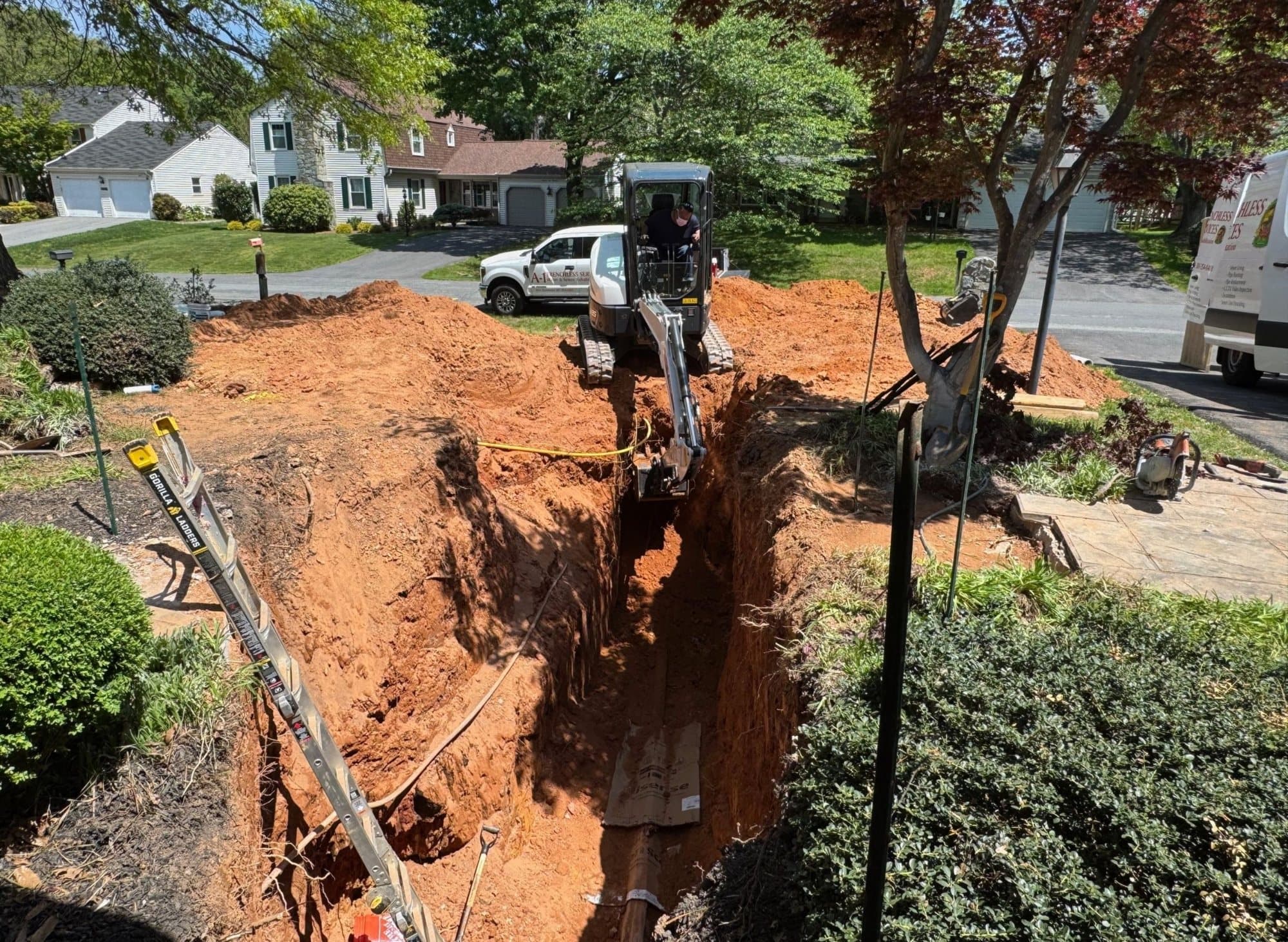
A spot repair targets a single crack, a broken joint or a short damaged stretch. Sometimes that is done from inside the pipe with a short sectional liner. Sometimes it means a small excavation right over the break, which the camera and locator pin down so the hole is in the right place.
A full liner or pipe bursting replaces the function of the whole run without a trench, working from small access pits. When the line is cracked in many places or roots come in at every joint, this is often the best value. Our trenchless sewer repair page goes deeper on those methods.
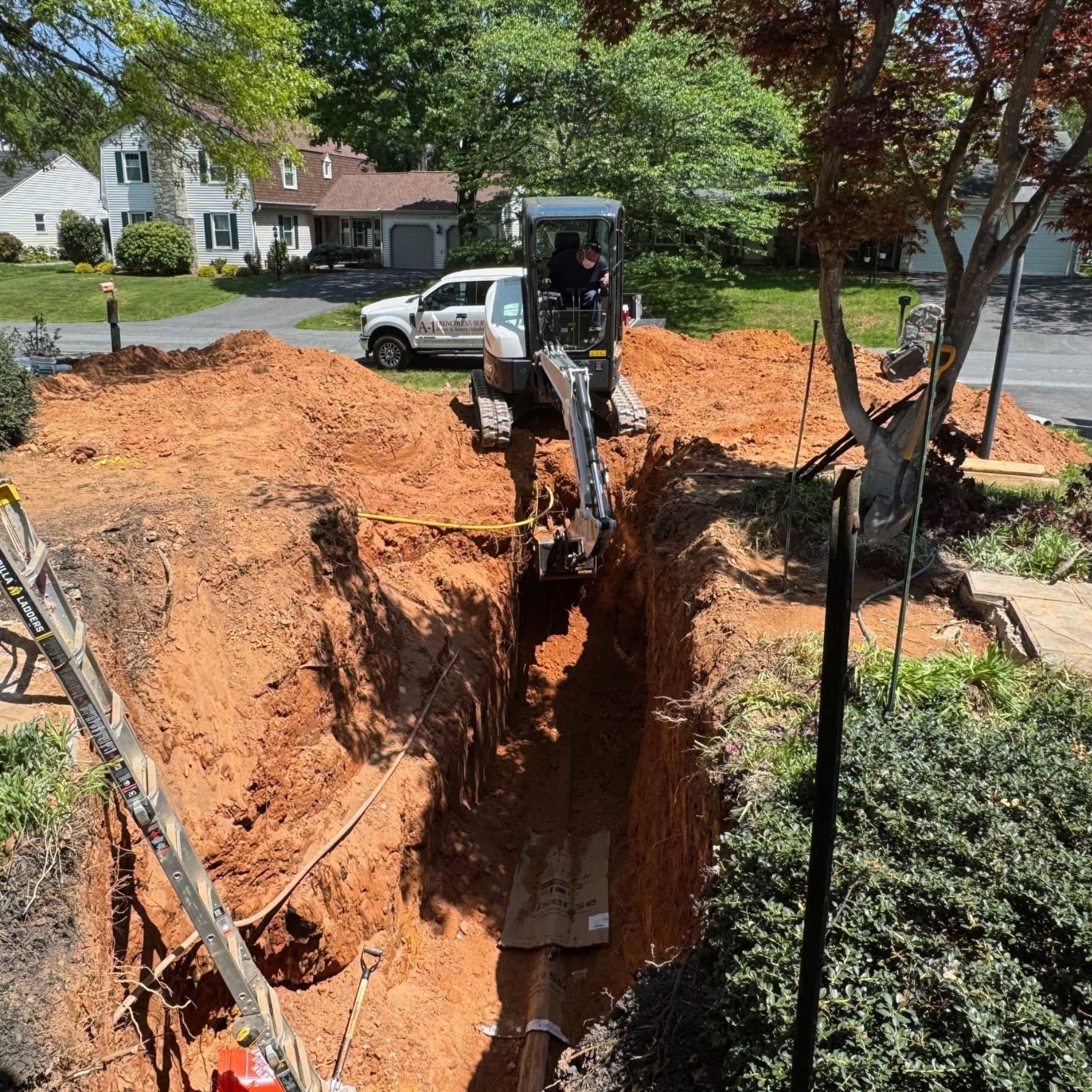
Dig and replace is still the right answer for some lines. A pipe that has collapsed, a deep belly that holds waste, or a line that has to change its route cannot be lined. When we dig, we shore the trench, lay new pipe on proper bedding with the right slope, and restore the ground before we leave.
From first call to finished line
- 1
Camera inspection
We record the line and mark every problem with its distance and depth.
- 2
Walk through the options
You see the footage, and we lay out which repair fits each problem and what it costs.
- 3
Permits and utility marking
We handle the permit where the job needs one, and have underground utilities marked before any digging.
- 4
The repair
Spot repair, lining or replacement, done to code with the right slope and bedding.
- 5
Test and camera check
We run water and put the camera back in so you can see the finished line.
- 6
Restore the yard
Backfill, compact, grade, and seed or sod where we dug.
Sewer line repair or trenchless repair, which page do you need?
This page covers every kind of sewer fix, including the ones that need digging, and how to choose between them. If you already know you want a no-dig repair and want the details on lining and pipe bursting, including when trenchless is not possible, head to the trenchless page.
Spot repair, trenchless or dig and replace
| Option | Best when | Digging | Watch out for |
|---|---|---|---|
| Spot repair | One crack or one bad joint in an otherwise good line | None or one small hole | Not worth it if the rest of the line is close behind |
| Trenchless lining or bursting | Damage along much of the run, roots at many joints | Small access pits | Needs a line that is not collapsed or badly sagging |
| Dig and replace | Collapsed pipe, deep bellies, or a line that must be rerouted | A trench along the repair | Most disruption, but sometimes the only real fix |
What drives the cost of sewer line repair
We do not quote sewer work from a phone call, because the price depends on what the camera shows. These are the biggest factors.
Read the full cost guide- The repair method
- A spot repair, a liner and a full replacement are very different jobs.
- Depth and length
- Deeper and longer lines mean more digging or more liner.
- What is on top
- Lawn is easy to restore. Driveways, patios, walkways and trees add work.
- Permits and connections
- Permit fees and work at the city or county connection can apply.
At home and at work
For homeowners
For homeowners, the big questions are how much of the yard gets disturbed and how long you will be without a working sewer. We plan the work to keep both as small as possible, and we tell you before we start.
Residential servicesFor businesses and property managers
For businesses, the concern is downtime. We plan sewer work around your hours where we can, keep the work area safe for customers and staff, and give you a realistic schedule.
Commercial servicesWhat a customer said about a big line job
One customer had both her sewer and water lines replaced and wrote on Google that a 10 foot trench was dug, that rain stretched the job out, and that the price was fair and the work was excellent. We quote that because it is honest: big jobs sometimes run long, and the thing that matters is doing the work right.
Questions we hear about sewer line repair
No. Many repairs are done from inside the pipe or from small access pits. A collapsed line or a deep sag is the main exception, and the camera tells us which situation you are in.
In most cases the homeowner is responsible for the lateral from the house to the connection at the main. The exact point varies, and we can help you find out where yours is.
Many residential jobs are done in one to a few days. Depth, length, weather and permits all affect it, and we give you a realistic time frame with the estimate.
The repaired spot can last a long time. The question is the rest of the line. If the camera shows the rest is in good shape, a spot repair is often the smart choice.
Usually not, but you may need to limit water use for part of the job. We tell you exactly when.
Yes. When a repair needs a permit, we take care of it as part of the job.
Often done together
Where we do this work

Water where it should not be?
Backups and broken lines get worse the longer water runs. Call us and tell us what you are seeing. We will tell you what to do right now and what it will take to fix it.
Monday to Friday, 8 AM to 5 PM. Free estimates on every job.