What if you could fix a failing pipe without turning your expensive concrete driveway into a messy construction zone? Most homeowners dread the sound of a jackhammer because they know it means high restoration costs and days of blocked vehicle access. It’s a common fear, but the reality of sewer line repair under driveway has changed. You don’t have to choose between a working sewer and a beautiful home exterior.
Modern trenchless technology offers a surgical alternative to traditional excavation. By using advanced methods like pipe lining, we can permanently repair underground lines with minimal damage to your property. These solutions are incredibly cost-effective because they preserve your infrastructure and use materials designed to last for up to 50 years. In this guide, we’ll explain how these “no-dig” systems work, why they’re the new standard for Maryland homeowners, and how to ensure your repair meets local codes without the headache of a total demolition.
Key Takeaways
- Identify the specific environmental factors, like soil compaction and vehicle weight, that cause sewer lines to fail beneath your driveway.
- Compare the long-term benefits of trenchless sewer line repair under driveway against the invasive costs of traditional open trench digging.
- Learn how Cured-in-Place Pipe (CIPP) lining creates a durable pipe within a pipe without removing a single piece of concrete.
- Discover why professional video inspections and hydro jetting are critical for preparing your lines for a successful, fast-turnaround repair.
- Get a clear roadmap for choosing the right trenchless method based on the age and material of your home’s existing plumbing.
Table of Contents
- The Hidden Crisis: Why Sewer Lines Fail Under Driveways
- Trenchless vs Traditional: Why Your Driveway Doesn't Have to Be Destroyed
- Top Trenchless Solutions for Concrete and Paver Driveways
- What to Expect: The Step-by-Step No-Dig Repair Process
- Choosing the Right Solution for Your Maryland Property
The Hidden Crisis: Why Sewer Lines Fail Under Driveways
Driveways are more than just parking spots. They’re heavy structural slabs that put constant pressure on the utilities buried beneath them. When your sewer line was first installed, the soil was packed tight to support the concrete above. Over decades, the weight of multiple vehicles combined with natural soil compaction creates a downward force that aging pipes simply weren’t designed to handle. This is a primary reason why many local homeowners eventually face the need for sewer line repair under driveway.
In established neighborhoods like Damascus and Bethesda, many homes still rely on original cast iron or clay pipes. These materials are particularly vulnerable to Maryland’s intense freeze-thaw cycles. As the ground freezes and expands, it shifts the soil beneath your concrete slab, often causing rigid pipe joints to snap or pull apart. Once a small crack forms, mature tree roots nearby sense the moisture and warmth. They’ll travel under your driveway to infiltrate the line, creating blockages that worsen every season. These factors create a “hidden crisis” that stays out of sight until the damage is significant.
Signs of a Sewer Break Beneath Your Concrete
Detecting a problem under several inches of reinforced concrete isn’t always easy. You might notice mysterious wet spots or small sinkholes appearing right at the edge of your driveway where the water is forced to escape. Inside the home, persistent sewer odors in your garage or front yard often signal that gases are venting through a fracture in the slab. If you notice multiple slow drains throughout your house, it’s rarely a simple clog. It usually indicates a structural issue in the main line buried under your property. Don’t ignore these early warnings, as they often precede a total pipe collapse.
Maryland Soil Factors and Pipe Longevity
The heavy clay soil common in Montgomery County poses a unique challenge for underground infrastructure. Clay expands and contracts significantly with moisture levels, putting immense stress on old cast iron joints. Many local mid-century developments also used “Orangeburg” pipe, a bituminized fiber material that essentially acts like wet cardboard after 50 years of service. When these pipes fail, traditional snaking is often a temporary fix. It might clear a clog, but it won’t fix a collapsed section or a root-cracked joint. This is why many residents are turning to Trenchless technology to solve the root cause. Choosing the right method for sewer line repair under driveway depends on identifying these local soil stressors before the concrete begins to settle or crack.
Trenchless vs Traditional: Why Your Driveway Doesn’t Have to Be Destroyed
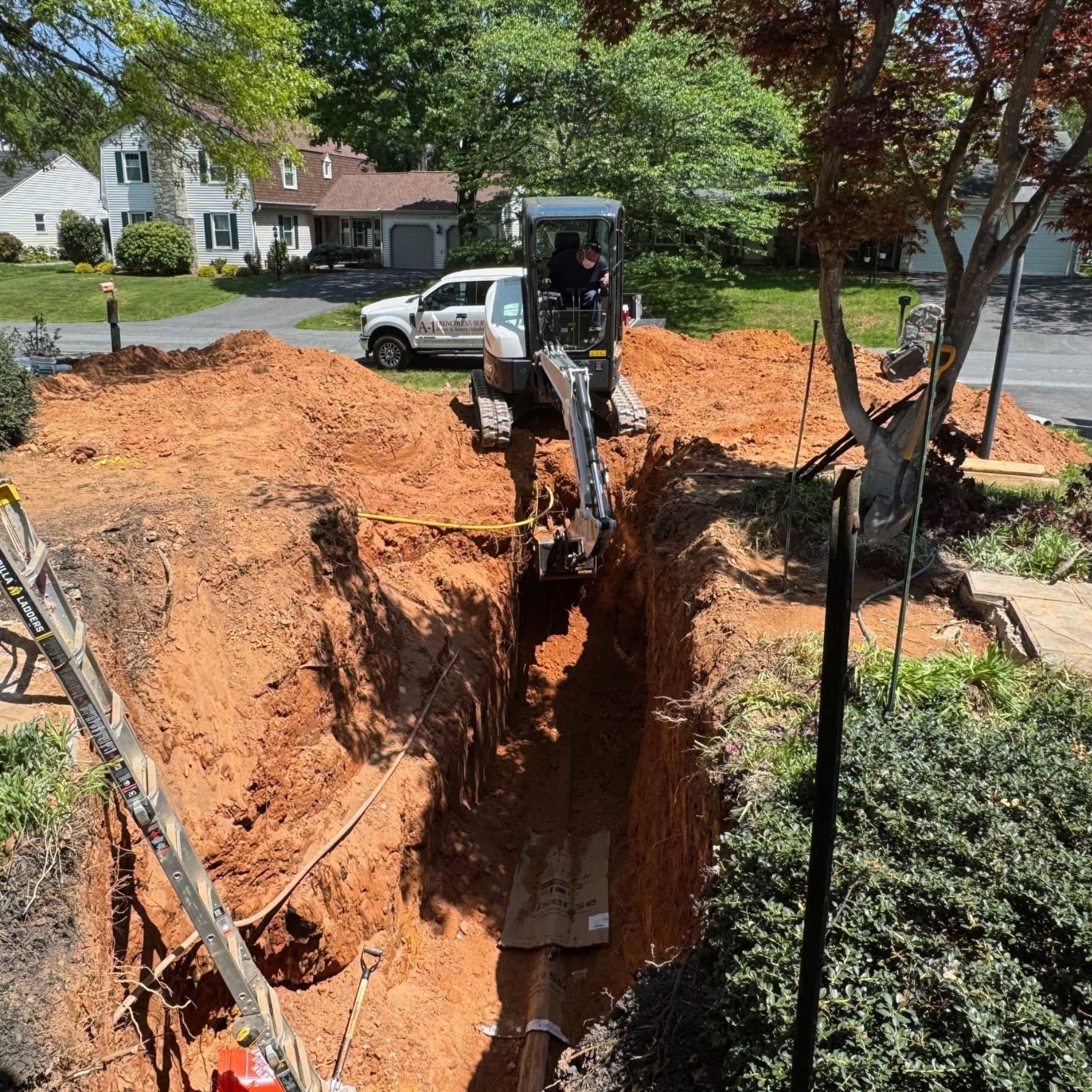
Choosing between traditional excavation and modern technology is the difference between a surgical procedure and a major demolition project. Traditional sewer repair requires a heavy crew to cut through your driveway, dig a deep trench, and haul away tons of debris before the plumber can even touch the pipe. This “open trench” method often leaves a 50-foot scar across your property that never quite looks the same. When you’re facing a sewer line repair under driveway, the disruption to your daily life can be overwhelming. You’re not just paying for a pipe. You’re paying for the destruction and eventual reconstruction of your home’s entryway.
Trenchless methods take a completely different approach. Instead of digging up the entire length of the pipe, technicians use small access points to reach the damage. This preserves your infrastructure and keeps your vehicles on the pavement rather than the street. According to the North American Society for Trenchless Technology (NASTT), these methods meet or exceed the structural standards of traditional replacements while significantly reducing the environmental impact on your yard. If you’re unsure which method fits your property, scheduling a video pipe inspection is the most reliable way to assess the damage without any initial digging.
The True Cost of Driveway Excavation
The plumbing bill is only part of the story with traditional digging. Homeowners often face massive hidden expenses that aren’t included in the initial quote. Re-pouring concrete is expensive. Matching the color and texture of an existing slab is nearly impossible. If you have stamped concrete or custom pavers, you might have to replace the entire driveway to ensure a uniform look. Beyond the money, the logistical nightmare is significant. You’ll lose driveway access for 7 to 10 days, forcing you to park on the street and navigate a construction zone every time you leave the house. There’s also a higher risk of accidentally striking other underground utilities, such as gas or water lines, when heavy machinery is involved.
The No-Dig Advantage for Maryland Homeowners
In high-end Maryland communities like Rockville and Bethesda, professional landscaping and custom hardscaping are major investments. Trenchless technology allows you to keep your manicured lawn and expensive stone paths intact. Because the work happens underground, you often bypass the need for certain city permits required for sidewalk destruction or street closures. Trenchless repair can save homeowners up to 40% in total restoration costs. While a traditional crew might spend two weeks on-site, a trenchless team can typically complete the repair in a single day. When you need a fast sewer line repair that restores your plumbing without sacrificing your property’s appearance, no-dig methods deliver a permanent, high-quality fix using modern epoxy liners that are resistant to the root intrusion and soil shifts that caused the original break.
Top Trenchless Solutions for Concrete and Paver Driveways
When you require sewer line repair under driveway, the specific technology used depends entirely on the condition of your existing pipe. We don’t rely on a one-size-fits-all approach. Instead, we match the method to the severity of the structural damage. This ensures a permanent fix while leaving your concrete or pavers completely undisturbed. By selecting the right surgical technique, we can address everything from a small root intrusion to a completely collapsed main line.
Pipe Lining (CIPP) Explained
Cured-in-Place Pipe (CIPP) is often the gold standard for driveway preservation. It involves saturating a flexible felt liner with a specialized epoxy resin and pulling it into the damaged pipe. Once the liner is in place, we use air or water pressure to expand it against the host pipe walls. The resin then hardens to create a smooth, smooth “pipe within a pipe.” This new structural wall seals cracks and bridges gaps, effectively stopping root intrusion for decades. It’s the preferred choice for high-end driveway finishes because it requires no heavy equipment on the slab. To understand the nuances of these technologies, it’s helpful to compare pipe bursting vs pipe lining before deciding on a specific path for your home.
Pipe Bursting for Total Replacements
Sometimes, an older line is too collapsed or “bellied” to accept a liner. In these cases, pipe bursting is the superior alternative. This method uses a powerful expansion head, often called a bursting mole, that is pulled through the old pipe. As it moves, it physically breaks apart the existing clay or cast iron and pulls a brand-new High-Density Polyethylene (HDPE) pipe behind it. HDPE is incredibly durable and flexible, which makes it ideal for Maryland’s heavy clay soil. It won’t snap or corrode like traditional materials, providing a total replacement with only two small access points at either end of the run. This allows for a full sewer line repair under driveway without the need for a 50-foot trench.
If the rest of your line is healthy but you have one specific break under the center of the driveway, we can perform a sectional point repair. This is a localized version of CIPP where we line only the damaged 2-to-10-foot section. It’s a fast, efficient way to address a specific crisis without the cost of a full-length rehabilitation. Regardless of the method, these solutions prioritize the integrity of your property while providing a pipe that is often stronger than the original installation.
What to Expect: The Step-by-Step No-Dig Repair Process
Understanding the workflow of a trenchless project helps demystify the technology. It’s a methodical, four-phase progression designed to ensure the sewer line repair under driveway is successful on the first attempt. Unlike traditional excavation, which starts with a backhoe, this modern approach begins with data and precision cleaning. By following a surgical process, we can restore your plumbing without ever disturbing the heavy concrete or delicate pavers above.
Diagnostics and Preparation
The process begins with a non-invasive visual assessment. We insert a high-definition sewer camera to map the exact location, depth, and nature of the pipe failure. This step is critical because it tells us whether the pipe is a candidate for lining or if it requires bursting. Once we have a clear map, the line must be meticulously cleaned to ensure the new materials bond correctly. High-pressure hydro jetting blasts away grease, heavy sludge, and stubborn root masses that have found their way into the joints.
For many Maryland homes built before 1975, the pipes are often made of cast iron. These lines develop a rough, crusty buildup over time that can prevent a new liner from adhering. This is where pipe descaling becomes essential. We use specialized rotating tools to scrape away decades of rust and mineral scale, returning the pipe to its original internal diameter. Skipping this step is a common mistake in general plumbing, but for a permanent trenchless fix, a smooth surface is mandatory. It ensures the epoxy resin creates a vacuum-tight seal against the host pipe. Homes built between the 1970s and 1990s are especially prone to tuberculation inside their metal lines, which is why professional sewer pipe descaling in Damascus is often a critical first step before any lining work can begin.
The Installation and Quality Check
Once the line is prepped, we move to the installation phase. We strategically place two small access pits at either end of the driveway, avoiding the main slab entirely. If we’re using the lining method, a resin-saturated felt sleeve is pulled into place and inflated. The curing process typically takes three to five hours depending on the ambient temperature. During this time, the resin hardens into a rock-solid, structural shell that is resistant to future root intrusion. Most homeowners find they can resume using their water and drains by the end of the same business day.
The final phase is a rigorous quality check. We perform a secondary video inspection to verify that the new line is smooth and the flow is unobstructed. We also conduct flow testing to ensure the system handles high-volume discharge perfectly. This post-repair verification provides the peace of mind that your sewer line repair under driveway is a 50-year structural solution. If you’re tired of dealing with recurring backups, contact us today to schedule a professional video inspection and get a clear look at your pipe’s condition.
Choosing the Right Solution for Your Maryland Property
Evaluating the severity of your sewer line damage is the first step toward a permanent resolution. While we’ve discussed the technical differences between lining and bursting, the most important factor is a precise diagnosis. Many general plumbers in Montgomery County might suggest a full excavation simply because they don’t have the specialized equipment for a sewer line repair under driveway. Choosing a partner who focuses specifically on trenchless technology ensures you aren’t paying for unnecessary demolition. The long-term ROI of no-dig methods is clear. When you factor in the cost of landscape restoration and concrete work, trenchless methods are generally 30% to 40% less expensive than traditional excavation. You receive a pipe material designed to last up to 50 years, representing a significant upgrade over original clay or cast iron.
The Value of Local Damascus Expertise
Our team understands the unique challenges of the Maryland landscape. From the heavy clay soil in Rockville to the mature oaks in Bethesda, we know exactly what causes pipes to fail in our community. We also stay current with local regulations, including WSSC requirements and Baltimore’s specific permitting processes, where fees can vary based on the scope of the work. This local knowledge allows us to navigate the bureaucracy for you, ensuring your project is fully compliant with the International Plumbing Code (IPC) adopted by Maryland. We take a neighborly approach to every service call. We treat your property with the same respect we would our own, providing transparent, project-based quotes that eliminate the “surprise” costs often associated with traditional digging.
Next Steps for a Stress-Free Repair
The path to a functional sewer system starts with a simple diagnostic scope. To prepare for our visit, ensure the area around your main cleanout is accessible and any vehicles are moved away from the driveway edges. This allows our technicians to work efficiently and complete the repair within a single day. Don’t wait for a small crack to become a total collapse that forces you to tear up your home’s entryway. You can contact A-1 Trenchless today for a no-dig sewer repair consultation. Our experts will provide a clear, high-definition look at your underground pipes and help you choose the most reliable path forward for your sewer line repair under driveway.
Restore Your Infrastructure Without the Demolition
Your driveway is a significant investment that doesn’t need to be sacrificed for a plumbing emergency. By choosing modern trenchless methods, you ensure a permanent structural fix while keeping your property’s exterior perfectly intact. These advanced techniques solve the root cause of pipe failure, such as heavy soil pressure and root intrusion, without the weeks of disruption and high restoration costs associated with traditional digging. It’s a faster, cleaner, and more reliable way to manage underground utilities.
As specialized pipe descaling experts serving Damascus, Bethesda, and Rockville since 2018, we provide the precision needed for a successful, long-term repair. We utilize the latest no-dig technology to turn a complex sewer line repair under driveway into a manageable, single-day project that provides a 50-year pipe life. You can trust that your home is in capable hands with a team that values your property’s integrity as much as you do.
Ready to protect your home’s value and restore your peace of mind? Save your driveway, schedule your professional no-dig sewer inspection with A-1 Trenchless today. We’re here to help you move forward with a clear, stress-free solution that keeps your life running smoothly.
Frequently Asked Questions
Is trenchless sewer repair under a driveway as strong as a new pipe?
Yes, trenchless repairs are often more durable than the original pipes they replace. Cured-in-place pipe (CIPP) liners create a smooth, structural wall that is highly resistant to chemical corrosion and root intrusion. Similarly, high-density polyethylene (HDPE) used in pipe bursting is a flexible, heavy-duty material designed to withstand the soil shifts and pressure common under heavy concrete slabs for 50 years or more.
How much does it cost to repair a sewer line under a driveway in Maryland?
The total investment depends on several variables, including the depth of the line, the total linear footage, and the specific trenchless method required. While the plumbing work itself is a primary factor, homeowners often find that trenchless solutions are more affordable overall because they eliminate the massive expense of tearing out and replacing a concrete or paver driveway. Every property has unique challenges that affect the final project scope.
Can you use pipe lining if the sewer pipe has completely collapsed?
Pipe lining requires an existing “host” pipe to act as a guide for the resin-saturated sleeve. If a section of the pipe has completely collapsed or is severely misshapen, lining is generally not a viable option. In these specific cases, pipe bursting is the preferred trenchless alternative. Bursting allows us to pull a brand-new pipe through the path of the old one, even if the original structure has failed.
How long does a trenchless sewer repair typically take to complete?
Most trenchless projects are completed within a single business day. Once the line is cleaned and prepped, the actual installation of a liner or a burst pipe usually takes only a few hours. This is a significant advantage over traditional excavation, which can leave your driveway inaccessible for a week or longer while waiting for trenching, inspections, and concrete curing. If your situation is urgent, our fast sewer line repair process is specifically designed to restore your system within 24 hours using advanced no-dig methods.
Will my insurance cover sewer line repair under the driveway?
Coverage depends entirely on your specific policy and the cause of the damage. Many standard homeowners insurance policies do not cover gradual wear and tear or root intrusion unless you have a “service line” endorsement. If the break was caused by a sudden, covered peril, you might have a claim. It’s best to review your policy or contact your agent to see if your sewer line repair under driveway is eligible for coverage.
Do I need to be home while the trenchless repair is being performed?
You don’t necessarily need to be present for the entire process, but you must be able to provide our technicians with access to the main sewer cleanout. It’s also important to remember that you cannot use any water or flush toilets while the repair is in progress. Most homeowners find it easiest to schedule the work for a day when they can be away from the house for a few hours while the system is offline.
What happens if there are tree roots in the sewer line under my driveway?
We remove all root obstructions before starting the repair. Using high-pressure hydro jetting, we clear the line of roots and debris to ensure a clean surface. Once the sewer line repair under driveway is complete, the new smooth pipe prevents future roots from entering the system. Because there are no joints for roots to penetrate, the repair provides a permanent shield against future blockages.
Is a permit required for trenchless sewer repair in Montgomery County?
Yes, a permit is a mandatory requirement for sewer line replacements in Montgomery County. Most of this work falls under the jurisdiction of the Washington Suburban Sanitary Commission (WSSC). A registered Master Plumber must obtain the permit and coordinate the necessary inspections to ensure the repair complies with the International Plumbing Code and local environmental standards.
First published . Written by the A-1 Trenchless team.