
Pipe descaling for old cast iron drain lines
Cast iron drain pipe rusts from the inside. Over the years, scale and rust nodules build up until a 4 inch pipe drains like a 2 inch one. Pipe descaling grinds that buildup away and gives you back the full bore, without opening walls or floors.
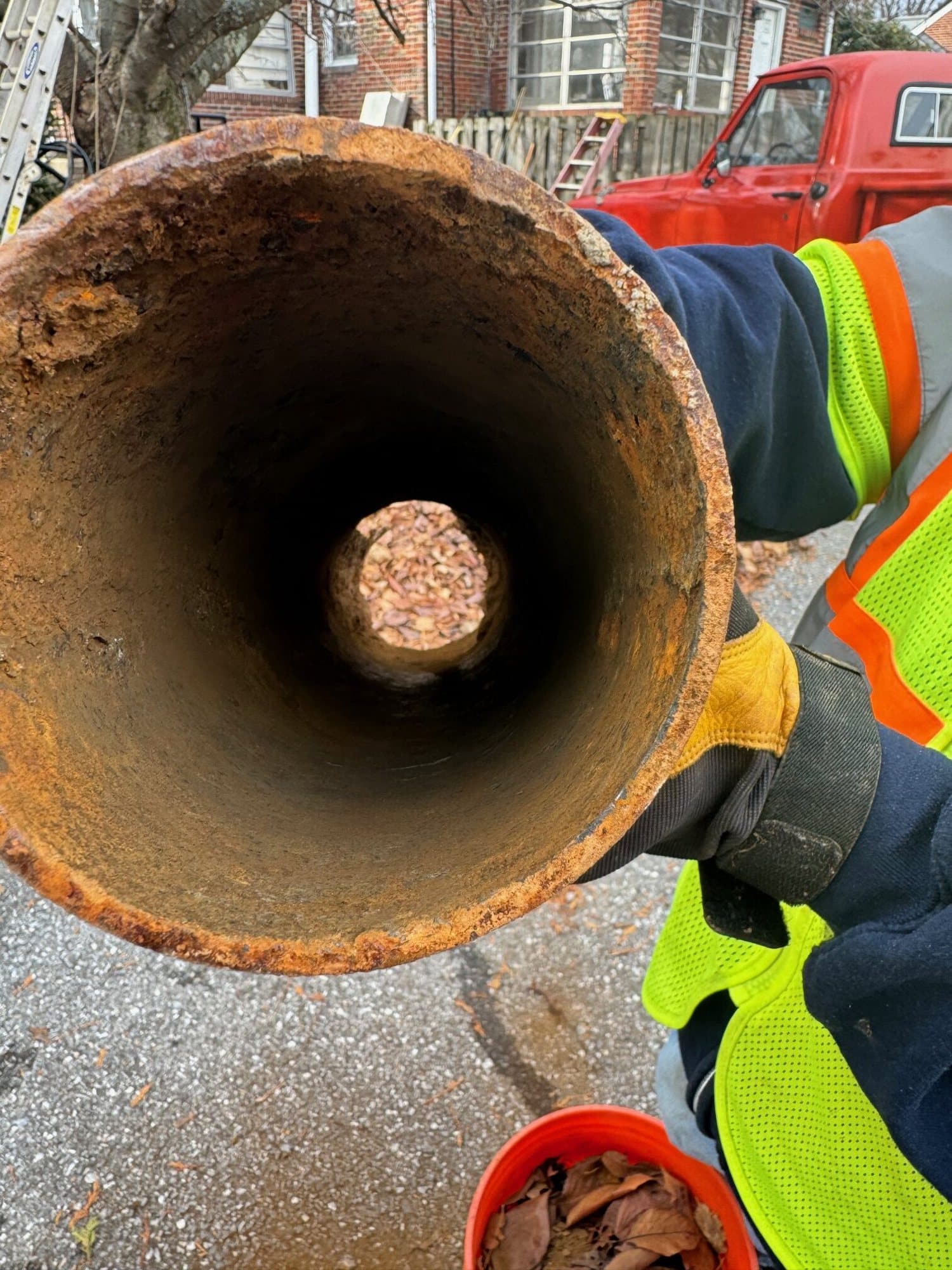
Signs your cast iron needs descaling
- 01
Slow drains all over the house
Scale narrows the stack and the main drain, so everything slows down together.
- 02
Clogs that catch on nothing
Paper and waste snag on rough scale that a smooth pipe would let slide by.
- 03
A house built before the 1980s
Cast iron was the standard drain pipe for decades. If yours is original, it has been scaling the whole time.
- 04
Snaking helps for a while
A cable pokes through, but the rough scale stays and the slowdown returns.
- 05
Rust colored flakes in a backup
Pieces of scale breaking loose are a sure sign of what the inside of the pipe looks like.
- 06
Before lining an old line
A liner needs a clean, round pipe to form against. Descaling is the prep step.
What pipe descaling is, and what it is not
Descaling uses a machine that spins a flexible shaft inside the pipe at high speed. On the end is a cutting head, often a set of steel chains with carbide tips, that grinds rust and scale off the pipe wall while leaving the iron itself in place. The loose material is flushed out down the line.
Done right, the pipe goes from rough and narrow back to close to its original size. Drains that crawled start keeping up again. Clogs stop snagging on the walls.
Descaling is not a cure for a pipe that is already failing. If the camera shows cracks, holes or walls rusted thin, grinding the scale away can expose how little pipe is left. In that case, descaling is the first step and a liner goes in after it, so you end up with a new pipe inside the old one without tearing out walls.
That is why every descaling job starts and ends with a camera. You see the before, the after, and an honest opinion on whether the pipe needs anything more.
How we descale a cast iron line
- 1
Camera inspection
We look at the scale and the condition of the pipe wall before any cutting.
- 2
Choose the head
The cutting head is sized to the pipe. Too aggressive can damage thin walls, too gentle leaves scale behind.
- 3
Descale in passes
We work the head through the line in stages, flushing as we go.
- 4
Flush the line
Loose scale gets washed down to the main so it cannot clog something else.
- 5
Camera again
A second look confirms the bore is clean and shows the true condition of the wall.
- 6
Decide on lining
If the wall is sound, you are done. If it is thin or cracked, we talk about lining it next.
Descaling, jetting or lining
| Method | Removes | When it fits |
|---|---|---|
| Descaling | Hard rust and scale on cast iron | Old cast iron that is narrowed but still structurally sound |
| Hydro jetting | Grease, sludge and soft buildup | Lines coated in soft material rather than hard scale |
| Lining after descaling | Nothing, it adds a new pipe inside | Cast iron that is thin, cracked or leaking once the scale is gone |
What affects the cost of descaling
Every line is different, so we price it after a look inside. These are the main factors.
Read the full cost guide- How much pipe
- A single stack is a smaller job than a stack plus the main drain under the slab.
- How heavy the scale is
- Thick tuberculation takes more passes than a light coating.
- Access points
- Good cleanouts make it quicker. Poor access adds time.
- Whether lining follows
- If the pipe needs a liner after descaling, that is quoted as its own step.
At home and at work
For homeowners
In homes, descaling usually targets the main stack and the drain under the basement slab, where cast iron has been in place since the house was built. It saves you from opening finished walls and floors.
Residential servicesFor businesses and property managers
Older commercial buildings and apartment blocks often have long cast iron runs serving many units. Descaling restores capacity without shutting the building down for a repipe.
Commercial servicesQuestions we hear about pipe descaling
Not when it is done with the right head and a camera check first. The goal is to remove scale, not metal. If the pipe is too thin to descale safely, we will tell you before we start.
It depends on how much sound iron is left. The camera after descaling shows the real wall condition, which is the best guide to how long the line has left.
When the pipe is still sound, descaling is far less disruptive and much cheaper than tearing out walls and slabs. When the pipe is failing, lining after descaling is usually the next best option to replacement.
No. It restores flow. If there are holes or cracks, the fix is a liner or a repair of that section.
Look at the large drain pipes in the basement. Cast iron is dark, heavy looking and has thick bell shaped joints. If you are not sure, we can tell in seconds.
Often done together
Where we do this work

Water where it should not be?
Backups and broken lines get worse the longer water runs. Call us and tell us what you are seeing. We will tell you what to do right now and what it will take to fix it.
Monday to Friday, 8 AM to 5 PM. Free estimates on every job.