A sewer backup rarely starts with a dramatic warning. More often, it begins with a slow floor drain, a toilet that bubbles when the shower runs, or a smell that keeps coming back no matter how much you clean. Those early signs often point to main sewer line problems, and waiting too long can turn a manageable repair into a major mess.
The main sewer line carries wastewater from your home to the municipal sewer system or septic connection. When that line is damaged, blocked, or failing, the issue affects the whole property, not just one fixture. That is why a recurring clog in more than one drain deserves a closer look. It is usually not a simple sink stoppage. It is often the system telling you something deeper is wrong.
What main sewer line problems usually look like
Homeowners often expect a broken sewer line to announce itself all at once. Sometimes it does. More often, the warning signs build slowly and show up in ways that seem unrelated at first.
You may notice multiple drains slowing down at the same time. A toilet on the lowest level may gurgle after you run the washing machine. Water may back up into a basement drain or tub because wastewater has nowhere else to go. Outside, soggy patches in the yard, extra-green grass over the pipe path, or a persistent sewer odor can all point to an underground line issue.
Not every symptom means the line has collapsed. A heavy grease blockage, root intrusion, pipe scaling, or a sag in the line can create similar behavior. That is why guessing is expensive. The right fix depends on knowing whether the problem is a blockage, a structural defect, or both.
The most common causes of main sewer line problems
Tree roots are a frequent culprit
Roots naturally seek moisture, and even a small crack or loose joint in an older sewer line can attract them. Once inside, they grow, catch debris, and slowly restrict flow. In the early stages, this may feel like an occasional drain issue. Over time, it becomes a repeat backup problem that keeps returning after snaking.
Root intrusion is especially common in aging clay or cast iron lines, but no underground pipe is completely immune if joints have weakened or the line has small openings.
Grease, wipes, and buildup create stubborn blockages
A main line is built to carry wastewater, not cooking grease, paper towels, hygiene products, or so-called flushable wipes. Grease cools and hardens along pipe walls. Wipes snag where the line is rough or narrowed. Over time, that buildup reduces the inside diameter of the pipe and slows everything behind it.
This is one reason a drain may seem fixed for a short time after clearing, then clog again a few weeks later. The immediate blockage may be gone, but the underlying buildup is still there.
Aging pipes can crack, corrode, or collapse
Older sewer lines wear out. Cast iron can corrode and scale from the inside. Clay pipes can crack or separate at joints. Orangeburg pipe, used in some older installations, can deform and fail as it ages. Even newer materials can suffer damage from poor installation, shifting soil, or heavy loads above the line.
Structural failure changes the repair conversation. If the pipe walls are deteriorating or sections have caved in, cleaning alone will not solve it for long.
Ground movement can throw the line out of alignment
Soil expands and contracts. Freeze-thaw cycles, settlement, nearby construction, and erosion all affect underground utilities. A sewer line that has shifted may develop a belly, which is a low section where waste and water collect instead of flowing properly. It may also separate at joints or crack under stress.
This kind of issue is easy to miss without a camera inspection because the line may still pass some water while causing repeat trouble.
Why repeated drain clogs should not be ignored
A single clogged sink can be a local fixture issue. But when toilets, tubs, and floor drains start acting up together, the problem is usually farther down the system. That matters because main sewer line problems do not stay contained.
Backups can damage flooring, drywall, trim, and stored belongings. Wastewater in a basement or lower level creates a sanitation issue and can shut down part of the property until cleanup is complete. For commercial buildings or facilities, the disruption can affect operations, tenants, and customer use.
There is also a cost factor. A line that might have been cleaned and repaired early can become a full replacement if deterioration or pressure from ongoing backups is allowed to continue.
How the right diagnosis saves time and money
The smartest first step is not guessing. It is seeing what is actually happening inside the pipe.
A video camera inspection allows a technician to identify the exact location and nature of the problem. That can reveal roots, grease buildup, broken sections, offsets, corrosion, or a sag in the line. It also helps determine whether the line can be restored with cleaning and trenchless methods or whether excavation is necessary.
This matters because different problems need different solutions. Hydro jetting may be ideal for heavy buildup and root debris, but it will not fix a collapsed pipe. Pipe descaling can improve flow in cast iron, but it is not a cure for a line that has cracked apart. A proper inspection keeps you from paying for the wrong service first.
Repair options depend on the condition of the line
Cleaning may solve blockage-related issues
If the line is structurally sound and the main problem is buildup, professional drain cleaning or hydro jetting may restore full flow. Hydro jetting uses high-pressure water to scour grease, sludge, and debris from the pipe walls. In the right situation, it is far more thorough than a basic cable cleaning.
That said, high-pressure cleaning is not for every pipe. If the line is fragile or badly deteriorated, the condition needs to be assessed first.
Trenchless repair works well in many cases
When a sewer line has cracks, root intrusion, or isolated damage but is still a good candidate for rehabilitation, trenchless methods can often repair the line with far less disruption than traditional excavation. Depending on the condition and layout, that may mean lining the pipe or replacing it with limited access points instead of digging across the entire yard.
For homeowners who want to protect driveways, landscaping, patios, or hardscaping, this can be a major advantage. It usually reduces restoration work and can shorten the overall timeline. Still, trenchless is not automatically the right answer for every property. If the line has collapsed completely or the grade is wrong, excavation may still be necessary.
Conventional replacement is sometimes the best long-term fix
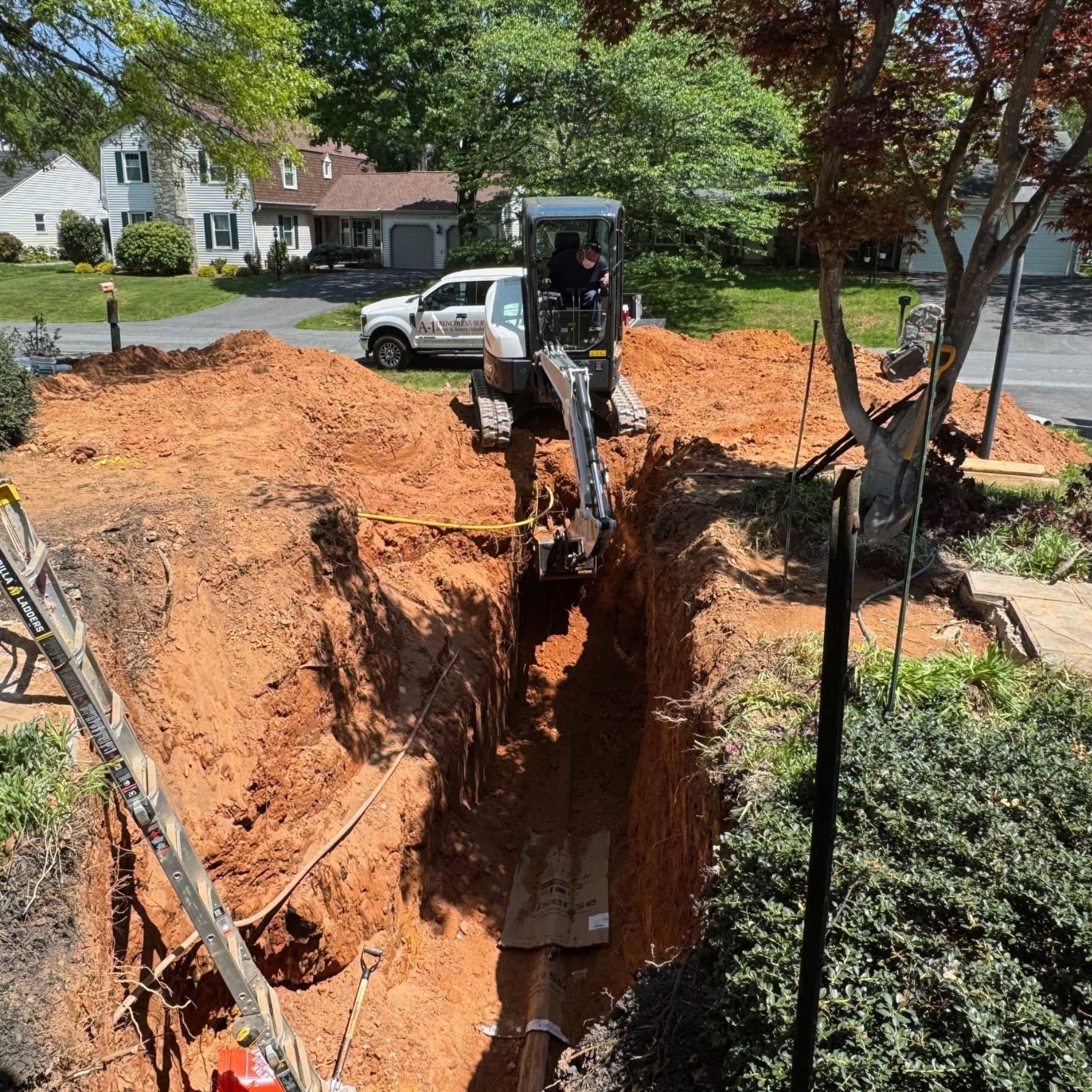
There are situations where the most dependable answer is to replace the line through excavation. That is especially true when the pipe has severe structural damage, poor slope, multiple failures, or materials that have reached the end of their service life.
A trustworthy contractor should explain why a conventional approach is recommended instead of pushing one method for every job. The best repair is the one that fits the real condition of the pipe and gives the property a durable result.
When to call for help
If sewage backs up into the home, call immediately. The same goes for repeated clogs in multiple fixtures, strong sewer odors, or wet areas in the yard near the sewer path. Waiting for the problem to become constant does not save money. It usually narrows your options.
Fast response is especially important if you have a finished basement, tenants, a commercial property, or any site where downtime creates additional damage or liability. A quick inspection can separate a manageable repair from a growing emergency.
How to reduce the risk of future sewer line trouble
Some sewer line failures are age-related and cannot be prevented forever, but a few habits help. Keep grease, wipes, paper towels, and hygiene products out of the drains. Be cautious about planting trees near underground utility lines. If your property has a history of root intrusion or older piping, periodic camera inspections can catch trouble before a backup happens.
It also helps to take recurring drain symptoms seriously. Temporary relief is not the same as a solved problem. If the same issue keeps coming back, there is usually a reason.
For property owners in Damascus and nearby communities, working with a contractor that can inspect, clean, repair, and replace sewer lines with both conventional and trenchless options gives you a clearer path forward. A-1 Trenchless Water & Sewer Repair Services LLC approaches these jobs with the equipment and experience needed to find the problem, explain it clearly, and fix it with as little disruption as the situation allows.
If your drains have been sending mixed signals lately, trust what the system is telling you. Catching main sewer line problems early is one of the simplest ways to protect your home, your property, and your budget.
First published . Written by the A-1 Trenchless team.