A sewer line problem usually starts quietly, then turns into a mess fast. One day it is a slow drain or a smell in the yard. Next, you are dealing with backups, soggy ground, or a line that has failed outright. When that happens, understanding your residential sewer replacement options helps you move quickly and make a smart decision for your home.
For most homeowners, the real question is not just whether the sewer line needs to be replaced. It is which replacement method makes the most sense for the property, the pipe condition, the timeline, and the budget. The right answer depends on what is happening underground and how much disruption you can afford above ground.
When sewer replacement is the better move
Some sewer problems can be cleared, repaired, or relined. Others have moved past that point. If a pipe has collapsed, has severe corrosion, has repeated root intrusion, or has major sections that are offset or broken, replacement is often the more dependable long-term fix.
Age matters too. Many older homes still have clay, cast iron, Orangeburg, or aging galvanized components in the system. These materials can weaken over time, and patching one spot may only buy time before the next failure shows up. In that situation, replacing the line can save money and stress compared with repeated service calls.
A proper camera inspection is what separates guesswork from a real plan. Before anyone recommends full replacement, the line should be inspected to confirm where the damage is, how extensive it is, and whether trenchless methods are actually a fit.
Residential sewer replacement options homeowners should know
There are two main categories when reviewing residential sewer replacement options: traditional excavation and trenchless replacement. Both can solve the problem. The difference is how the old line is accessed and what happens to your yard, driveway, sidewalk, and landscaping along the way.
Traditional sewer line replacement
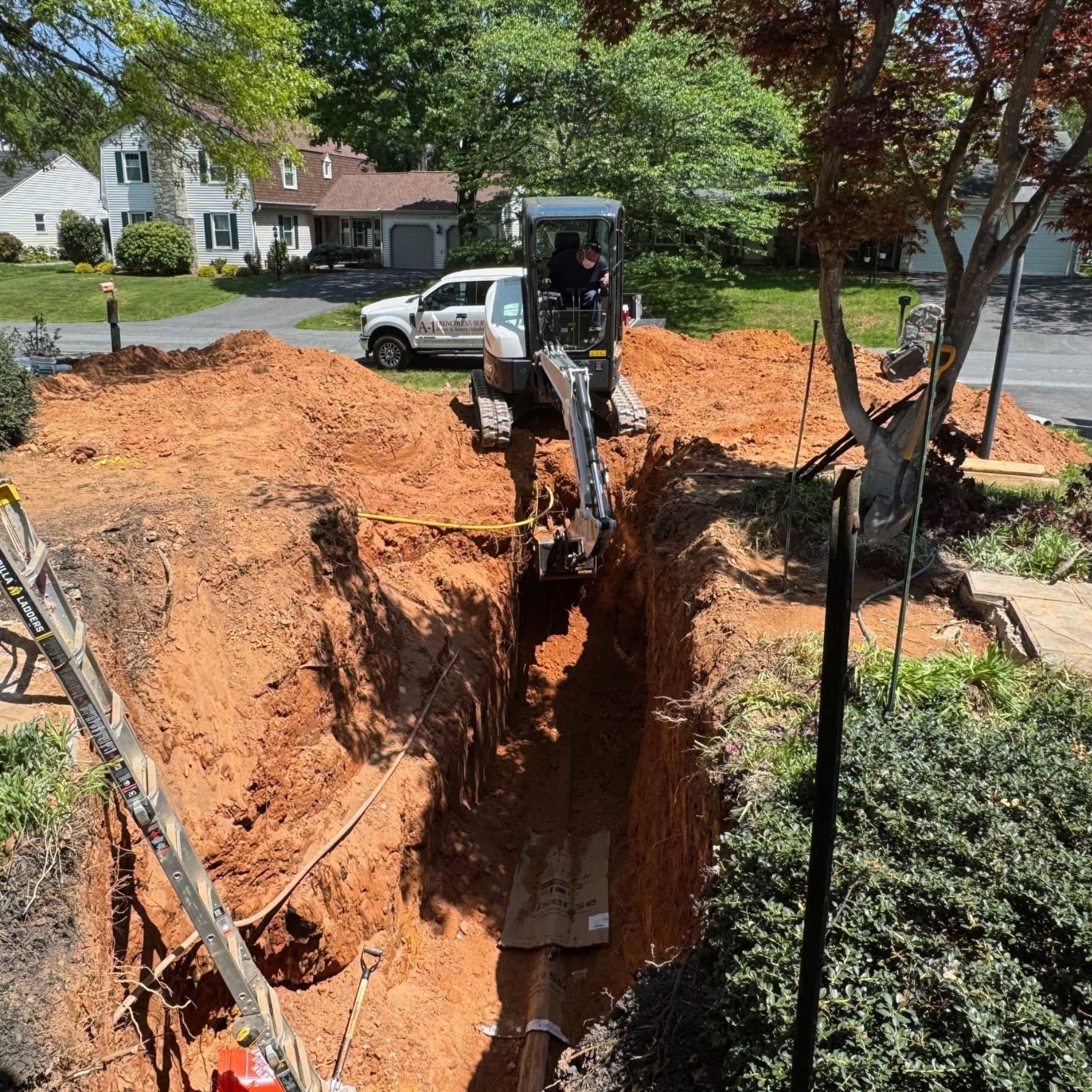
Traditional replacement involves digging a trench to expose the damaged sewer pipe and remove it. A new line is then installed in its place. This method has been used for decades and is still the right choice in some situations.
If the pipe has fully collapsed, if the line has serious depth issues, or if the route needs to be changed significantly, open trench replacement may be necessary. It also makes sense when there are multiple utility conflicts, major bellies in the line, or site conditions that make trenchless installation impractical.
The trade-off is disruption. Digging can affect lawns, gardens, hardscaping, fences, and sometimes parts of a driveway or walkway. Restoration work may add time and cost after the plumbing work is complete. The advantage is direct access to the pipe and a clear view of surrounding conditions.
Trenchless sewer line replacement
Trenchless replacement is designed to reduce surface disruption. Instead of opening a long trench across the property, the contractor works from limited access points. For many homeowners, that means less damage to landscaping, faster completion, and less cleanup.
Trenchless does not mean no digging at all. It usually means far less digging than a conventional replacement. That distinction matters, especially if the sewer line runs under a mature lawn, patio, driveway, or other finished areas you want to protect.
Two trenchless methods are most common in residential work: pipe bursting and cured-in-place pipe lining, often called CIPP. While both are often grouped together, they are not the same solution.
Pipe bursting vs pipe lining
Pipe bursting
Pipe bursting is a replacement method, not a repair coating. A bursting head is pulled through the old pipe, breaking it apart while pulling a new high-density polyethylene pipe into place behind it. The result is a new continuous pipe installed along the same general path.
This is often a strong option when the old pipe is badly damaged but still allows the equipment to pass through. It can work well for replacing clay, cast iron, or other deteriorated lines while minimizing digging. Because the old pipe is being replaced, pipe bursting can offer a long service life and a durable result.
It is not ideal for every property. If the existing line has severe sags, major directional changes, or conditions that prevent the bursting equipment from moving through cleanly, another method may be better.
Pipe lining
Pipe lining creates a new pipe within the existing one. A resin-saturated liner is inserted into the old sewer line, then cured in place to form a smooth, jointless interior pipe. This can be an excellent option when the host pipe is still structurally suitable for lining.
The biggest benefit is minimal disruption. In many cases, lining avoids major digging and preserves the yard and hardscape. It can also seal cracks, minor offsets, and root entry points.
The limitation is that it is not a full excavation-based replacement of the old pipe. If the original line has collapsed, has severe deformation, or has sections missing, lining may not be possible. It also slightly reduces the inside diameter of the pipe, though in residential systems that is often not a practical issue when the line is properly prepared first.
How to choose between sewer replacement options
The best method depends on what the inspection shows. That is the starting point every time. A contractor should be able to explain not only what is wrong, but why one option is being recommended over another.
Property layout is one major factor. If the sewer runs under a long driveway, decorative landscape beds, retaining walls, or concrete slabs, trenchless methods may offer a clear advantage. If access is simple and the affected area is already open or easy to restore, traditional excavation may be more reasonable.
Pipe condition also drives the decision. A line with isolated problems may be a candidate for lining. A pipe that is too far gone may need pipe bursting or full excavation. If the grade itself is wrong, open replacement may be the only way to correct it properly.
Budget is part of the conversation too, but it should be weighed carefully. The lowest upfront number is not always the lowest total cost once restoration, future repairs, and long-term reliability are considered. A method that protects the property and solves the issue fully may provide better value than a cheaper short-term fix.
What the replacement process usually looks like
Most residential sewer replacement projects begin with a camera inspection and location work. This identifies the exact condition of the line, where the damage is, and how the pipe runs across the property. In some cases, additional cleaning is needed before a full evaluation can be made.
Once the method is chosen, the next steps involve permitting if required, utility marking, access preparation, and installation. A dependable contractor will explain the timeline, how long the sewer service may be interrupted, and what parts of the property may be affected.
After installation, the new line should be tested or reinspected to confirm proper flow and workmanship. If excavation was involved, restoration follows. If a trenchless method was used, cleanup is usually simpler, though access areas may still need minor repair.
Common mistakes homeowners make
One mistake is waiting too long after repeated sewer warnings. Frequent drain backups, foul odors, gurgling fixtures, or wet spots in the yard often point to a line problem that is getting worse. Delaying action can lead to emergency conditions and more property damage.
Another mistake is choosing a method before getting a diagnosis. Some homeowners hear trenchless is better and assume it works for every situation. Others assume digging is the only real solution. Neither is always true. Good sewer work starts with accurate inspection, not a one-size-fits-all sales pitch.
It also helps to ask about the full scope of cost. A low quote for excavation may not include all restoration. A trenchless proposal may require prep work such as descaling or hydro jetting before installation. Clear expectations prevent surprises.
Why experienced evaluation matters
Sewer replacement is underground work, which means most of the problem is out of sight until the right equipment is used. That is why experience matters so much. A trained crew using camera inspection and modern diagnostics can identify whether a line should be cleared, repaired, lined, burst, or fully excavated.
For homeowners in Damascus and nearby areas, companies like A-1 Trenchless Water & Sewer Repair Services LLC focus on exactly this kind of problem, finding the least disruptive, most dependable fix based on the actual condition of the pipe. That matters when you need fast answers and do not want to tear up a property unnecessarily.
If you are weighing residential sewer replacement options, the smartest next step is not guessing which method sounds best. It is getting a clear inspection, a straight explanation, and a repair plan that fits your home, your property, and how quickly you need the problem solved.
First published . Written by the A-1 Trenchless team.