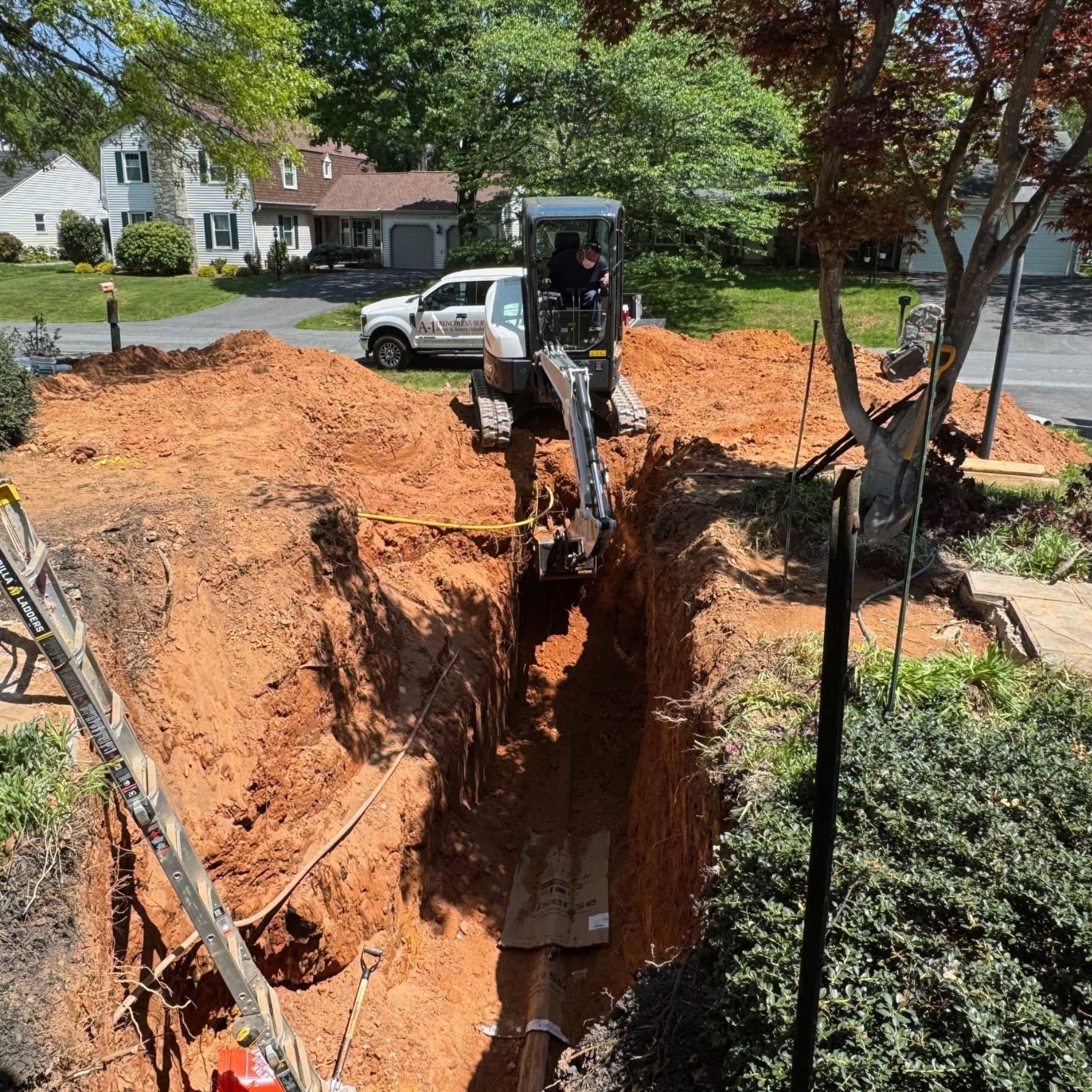
A sewer line break in Maryland is rarely a random accident. It is usually the predictable result of aging local infrastructure meeting specific environmental stressors. If you’re currently facing a backup, you’re likely wondering what causes sewer line to break and if your yard is about to be destroyed by heavy excavation. We understand that this uncertainty is stressful, especially when you’re trying to determine if you have a simple clog or a total structural failure.
The good news is that identifying the root cause doesn’t have to involve guesswork or messy digging. You can discover the specific factors that lead to pipe failure and learn how to catch them before they become emergencies. We will walk through the five most common culprits for local homeowners, including why tree roots account for up to 75 percent of all blockages. You’ll also see how modern video pipe inspections provide a clear diagnosis without any digging, paving the way for efficient, trenchless repair methods that preserve your property and your peace of mind.
Key Takeaways
- Learn how Maryland’s unique soil composition and seasonal temperature changes create physical stress that leads to pipe shifting and failure.
- Understand exactly what causes sewer line to break, from invasive tree roots seeking moisture to the natural corrosion found in aging cast iron systems.
- Identify subtle warning signs like persistent sewage odors or unusually lush grass patches before a minor issue turns into a major backup.
- Discover how high-definition video pipe inspections provide a 100% accurate diagnosis without the need for messy yard excavation.
- Explore modern trenchless repair methods like CIPP lining and pipe bursting that fix structural breaks permanently with minimal property disruption.
Table of Contents
- Environmental Factors: Why Maryland Soil Stresses Your Pipes
- The Big 3: Most Common Causes of Sewer Line Failure
- Symptoms of a Broken Sewer Line: Warning Signs
- Modern Diagnostics: Finding the Break Without the Mess
- Trenchless Solutions: Fixing the Break Permanently
Environmental Factors: Why Maryland Soil Stresses Your Pipes
Many homeowners assume pipes fail simply because they’re old. While age is a factor, the ground surrounding your sanitary sewer system plays a much larger role than most realize. In Maryland, our unique geology creates a challenging environment for underground utilities. Understanding what causes sewer line to break often starts with looking at the very dirt in your backyard.
Maryland is famous for its heavy, expansive clay soil. This material acts like a giant sponge. It swells significantly when wet and shrinks during dry spells. This constant cycle of expansion and contraction puts immense physical stress on buried pipes. When heavy rain saturates the ground, it also creates hydrostatic pressure. This is the force of water-logged soil pushing against the exterior of your pipes. If a pipe is already weakened by age, this external pressure can easily cause a structural collapse or a major crack.
Our local Damascus geography adds another layer of complexity. The rolling hills and varied terrain mean that water runoff doesn’t always drain evenly. In many residential areas, water collects in low-lying spots, leading to localized soil saturation. This concentrated moisture accelerates pipe deterioration in ways that flat landscapes don’t experience.
Soil Shifting and Settlement
Soil doesn’t always stay where it was originally placed. If the earth beneath a pipe settles unevenly, the pipe loses its structural support. This often leads to the formation of “bellies,” or sags, in the line. These low spots collect waste and debris, eventually causing a total blockage or a break at the joints. Heavy rain on loosely compacted soil around older homes is a frequent trigger for this. You might even find that new construction on a neighboring lot changes the way water flows across your property, causing the soil to shift and damage your existing line. For those overseeing development projects or looking into how professional teams handle specialized sewer works and construction services on different sites, you can learn more about Sewer Services Sydney.
The Freeze-Thaw Cycle in Montgomery County
Winter in Montgomery County brings deep frost lines that can reach several feet into the earth. As the ground freezes, it expands and exerts intense vertical pressure on shallow sewer lines. Older clay pipes are particularly vulnerable because they are brittle and cannot flex under thermal expansion. While a “winter break” might seem like a sudden emergency, it’s often the result of years of cumulative stress from these seasonal cycles. Identifying these environmental stressors early can help you decide if it’s time for a proactive inspection before the next deep freeze arrives.
The Big 3: Most Common Causes of Sewer Line Failure
While external soil pressure is a major factor, most failures start from within the pipe itself. Understanding what causes sewer line to break requires looking at how internal stressors and outdated materials interact with the environment over several decades. In Maryland, we see three primary culprits that lead to the majority of residential sewer emergencies.
Tree Root Intrusion
Tree roots act like heat-seeking missiles. They sense the moisture and nutrient-rich warmth radiating from your sewer line through microscopic cracks or loose joints. Once a tiny hair-root finds its way inside, it thrives in the ideal growing conditions. The root expands in diameter as it grows, eventually acting like a slow-motion wedge that cracks the pipe or forces joints apart. Research shows that tree roots account for 50 percent to 75 percent of all sewer blockages. When these roots aren’t managed, they lead to significant structural damage and sanitary sewer overflows. For homeowners with mature landscaping, learning how to clear tree roots in pipes with permanent solutions is a critical step in preventing a total line collapse.
Pipe Corrosion and Descaling Needs
Cast iron was the industry standard for decades, but it has a specific expiration date. These pipes often suffer from “channeling,” a process where the bottom of the pipe erodes until it becomes paper-thin or disappears entirely. Simultaneously, rust and mineral deposits create a rough “scale” on the interior walls. This buildup creates friction, snags debris, and eventually leads to structural weakness. Understanding what is pipe descaling can help you remove this harmful buildup and restore flow before the corrosion becomes terminal. It’s a proactive way to extend the life of a cast iron system without immediate replacement.
Structural Collapse of Outdated Materials
Sometimes the material itself is the problem. Many older Maryland homes still rely on clay or Orangeburg pipes. Clay is extremely brittle. It cannot flex when the heavy Maryland clay soil shifts or settles. Orangeburg pipe, common in homes built between 1945 and 1970, is made of wood pulp and tar. After 50 years underground, it essentially turns into wet cardboard and collapses under the weight of the earth. Poor original installation, such as using low-quality rubber couplings or failing to provide a proper gravel bed, only accelerates this failure. If you suspect your older line is struggling, a professional video pipe inspection is the most reliable way to see what’s happening underground without digging up your yard.
Symptoms of a Broken Sewer Line: Warning Signs
Identifying what causes sewer line to break is the first step toward a solution, but recognizing the early warning signs can save you thousands in property restoration costs. Many homeowners ignore subtle changes in their plumbing, assuming a slow drain is just a minor clog. However, structural failures underground often announce themselves through specific indoor and outdoor symptoms before a total backup occurs.
Indoor Red Flags
Your home’s fixtures often provide the first clues of an underground break. Gurgling sounds from your toilets or drains are more than just a nuisance. They often indicate that air is being trapped by a break or a significant “belly” in the line. Unlike a standard clog that affects one sink, a broken main line usually causes issues across multiple fixtures simultaneously. You might also notice a persistent “rotten egg” smell. This is hydrogen sulfide gas escaping from the sanitary sewer system and entering your living space through cracks in the pipe. In some cases, slow-leaking sewer lines behind walls or under slabs lead to unexpected mold growth or damp spots on floorboards, even if no standing water is visible.
Outdoor Structural Clues
The exterior of your Maryland property can be just as revealing as your bathroom fixtures. If you notice a specific patch of grass that is significantly greener and more lush than the rest of your lawn, it’s rarely a stroke of luck. Sewage acts as a potent fertilizer. A break in the line provides a constant supply of nutrients to the soil above. While the grass looks healthy, the ground beneath is likely becoming saturated and unstable. This saturation eventually leads to visible indented areas or sinkholes in your yard.
Pavement is also susceptible to these underground shifts. A sewer line repair under driveway often starts with the discovery of mystery cracks in the concrete or asphalt. As the leaking water washes away the supporting soil, the heavy driveway material begins to sag and fracture. In extreme cases, this water saturation can even reach your home’s foundation, leading to new cracks in the basement walls. Catching these signs early allows for a professional diagnosis before the structural integrity of your home or driveway is compromised.
- Persistent odors: Sewage smells in the basement or yard that don’t dissipate.
- Multiple slow drains: Sinks and tubs that drain slowly despite using standard cleaning methods.
- Lush patches: Isolated areas of thick, dark green grass over the path of the sewer line.
- Ground indentation: Soft spots or sunken areas in the lawn, mulch beds, or driveway.
Modern Diagnostics: Finding the Break Without the Mess
Determining exactly what causes sewer line to break no longer requires a backhoe and a destroyed front lawn. In the past, plumbers often had to rely on “guess and dig” methods, excavating large sections of property just to locate a suspected leak. Today, modern diagnostic technology allows us to see inside your pipes with surgical precision. This shift from manual exploration to high-definition imaging saves Maryland homeowners thousands of dollars in unnecessary labor and landscaping restoration.
Video Pipe Inspection Technology
The cornerstone of modern diagnostics is the high-resolution video pipe inspection, often called a “sewer scope.” For Damascus homeowners, this process is straightforward and non-invasive. A waterproof, high-definition camera attached to a flexible fiber-optic cable is fed through an existing cleanout or access point. As the camera travels through the line, it transmits a real-time feed to a monitor, allowing you to see the interior condition of your pipes firsthand. This technology is the only way to definitively find blockage in sewer line issues while distinguishing them from structural failures. Whether it is a cluster of invasive roots at a joint or a complete section of collapsed Orangeburg pipe, the camera provides undeniable visual evidence.
The “No-Dig” Diagnostic Advantage
Precision is the primary benefit of trenchless diagnostics. Along with the visual feed, we use signal-emitting locators on the camera head to map the exact depth and GPS coordinates of any damage from above ground. This eliminates the need for exploratory trenching. By pinpointing the break to a specific two-foot section, we can plan a targeted repair that protects your mature trees, expensive hardscaping, and underground utilities.
Crucially, these inspections allow us to differentiate between a “soft” blockage and a physical pipe collapse. A soft blockage, like grease buildup or a localized clog, can often be cleared with hydro jetting. However, if the camera reveals a structural break, no amount of cleaning will fix the underlying issue. Understanding what causes sewer line to break in your specific case ensures you don’t waste money on temporary fixes for permanent structural problems. If you are experiencing persistent backups, you should schedule a professional Video Pipe Inspection to get a definitive answer before the situation worsens.
When preparing for an inspection, you can expect the following:
- Minimal setup: Most inspections utilize existing access points in your basement or yard.
- Immediate results: You can view the footage alongside the technician and receive a digital copy for your records.
- Accurate mapping: We mark the exact location of the issue on the surface, ensuring any future work is highly localized.
- Comprehensive health check: The camera inspects the entire run to the city main, identifying potential future failure points.
Trenchless Solutions: Fixing the Break Permanently
Once a professional inspection reveals what causes sewer line to break on your property, the focus shifts from diagnosis to resolution. For most Maryland homeowners, the biggest fear is the sight of a backhoe tearing up a manicured lawn or a paved driveway. Fortunately, modern trenchless technology has made traditional excavation largely unnecessary. We can now restore your sewer system’s structural integrity from the inside out, often completing the work in a single day without the mess of a trench.
Pipe Lining and Bursting Explained
There are two primary ways we fix a broken line without digging. Cured-in-Place Pipe (CIPP) lining involves inserting a flexible, resin-saturated sleeve into the damaged pipe. Once the resin cures, it creates a smooth, structural “pipe within a pipe” that is actually stronger than the original. If the existing pipe has completely collapsed, we utilize the pipe bursting method. This involves pulling a high-density polyethylene (HDPE) pipe through the old line, physically breaking the damaged pipe apart as the new one is installed. When comparing pipe bursting vs pipe lining, the choice often depends on the level of structural decay found during your initial inspection.
These trenchless materials offer several long-term advantages over traditional clay or cast iron. Because the new pipe is smooth, it eliminates the joints where tree roots typically enter. If you have experienced recurring root intrusions, understanding how to clear tree roots in pipes and implement permanent solutions before choosing a repair method can help ensure your new system stays protected for decades. Additionally, the advanced polymers we use are completely immune to the corrosion and scale buildup that eventually kills metal pipes. This means your new sewer line won’t just be a temporary fix. It’s a permanent upgrade designed to last for decades. Best of all, because we only need small access points, your patios, mature trees, and expensive landscaping remain completely undisturbed.
Next Steps for Damascus Property Owners
Ignoring a broken sewer line is a recipe for property damage. As water continues to leak into the surrounding soil, it can lead to sinkholes, driveway failure, and even foundation instability. Taking immediate action is the only way to prevent a manageable repair from turning into a major construction project. In Montgomery County, homeowners trust A-1 Trenchless Water & Sewer Repair Services LLC because we combine deep local expertise with the latest industry advancements to make complex repairs seem simple and manageable.
Don’t let the stress of a potential sewer break disrupt your home life any longer. If you’ve noticed gurgling drains, lush patches of grass, or persistent odors, it’s time to get a definitive answer. Our team is ready to provide the clear, accurate diagnosis you need to move forward with confidence. Contact us for a professional video inspection today and let our modern trenchless solutions restore your peace of mind and your property’s value.
Protect Your Property with Modern Trenchless Solutions
Identifying what causes sewer line to break is the first step toward reclaiming your home’s comfort and safety. We have explored how Maryland’s heavy clay and aging cast iron create a perfect storm for pipe failure, but these issues no longer require the destruction of your yard. By choosing advanced diagnostics and trenchless repairs, you are investing in a durable, root-resistant system that often outperforms the original installation.
A-1 Trenchless Water & Sewer Repair Services LLC has specialized in no-dig pipe restoration since 2018. Serving Damascus and the surrounding Montgomery County area, we utilize modern video diagnostic equipment to ensure every homeowner receives an accurate, transparent assessment. Our goal is to make a stressful emergency feel like a manageable maintenance step through professional confidence and local dependability. Maryland homeowners dealing with aging underground infrastructure should also be aware that the same trenchless no-dig methods used for sewer repairs apply equally to lead service line replacement, a critical concern under the EPA’s 2026 regulations for safe drinking water.
Schedule Your Video Pipe Inspection with A-1 Trenchless Water & Sewer Repair Services LLC Today
You don’t have to wait for a total collapse to take action. Proactive care preserves your property’s value and prevents the structural damage associated with long-term leaks. We are ready to help you navigate these repairs with minimal disruption and maximum reliability.
Frequently Asked Questions
Can a sewer line break under a house foundation?
Yes, sewer lines frequently fail directly beneath a home’s concrete slab. This usually occurs due to soil settlement or the natural shifting of the earth under the weight of the structure, which puts immense pressure on rigid pipes. In many older homes throughout Montgomery County, cast iron pipes under the foundation eventually corrode from the inside out, leading to structural failure that can compromise the slab itself.
How do I know if my sewer line is broken or just clogged?
While a clog is a temporary obstruction, a break is a permanent structural failure. If you find yourself clearing the same drain multiple times a year, you are likely dealing with what causes sewer line to break rather than a simple buildup of debris. Recurring backups, especially when accompanied by sewage odors or wet spots in the yard, almost always point to a crack or a collapsed section of pipe.
Will insurance cover a broken sewer line in Maryland?
Standard homeowners insurance policies in Maryland typically do not cover sewer line repairs caused by age, wear and tear, or tree root intrusion. Coverage is generally reserved for sudden, accidental damage from an external force. However, many residents in Bethesda and Rockville have specific “service line” endorsements or riders on their policies that may provide coverage for underground utility failures.
How much does it cost to fix a broken sewer pipe?
The total investment for a repair depends on the depth of the line, the length of the damaged section, and the specific repair method chosen. In Maryland, building permit fees for replacing old sewer pipes start at a baseline and increase with the size and complexity of the project. Choosing trenchless methods can often lower the total project cost by eliminating the need for expensive patio, driveway, or landscaping restoration.
Is it possible for tree roots to break a brand new PVC pipe?
While PVC is much more durable than older materials, it is not entirely immune to root damage. Roots typically cannot penetrate the solid walls of a PVC pipe, but they can enter through joints that were not properly sealed or solvent-welded during installation. Once inside a joint, the root will expand as it grows, eventually forcing the coupling apart or causing the plastic to fracture under the pressure.
What happens if I ignore a small crack in my sewer line?
A small crack will inevitably grow into a major structural failure. As sewage leaks into the surrounding soil, it creates voids and washes away the earth that supports your yard, driveway, or foundation. This loss of support is a primary factor in what causes sewer line to break further, as the pipe sags and eventually collapses under the weight of the ground above.
How long does a typical trenchless sewer repair take to complete?
Most trenchless repairs are completed in a single day, typically requiring only four to eight hours of active work. This is significantly faster than traditional methods, which can leave your property in a state of construction for a week or more. Because there is no major excavation required, your water and sewer service can be restored quickly with minimal disruption to your daily routine.
First published . Written by the A-1 Trenchless team.