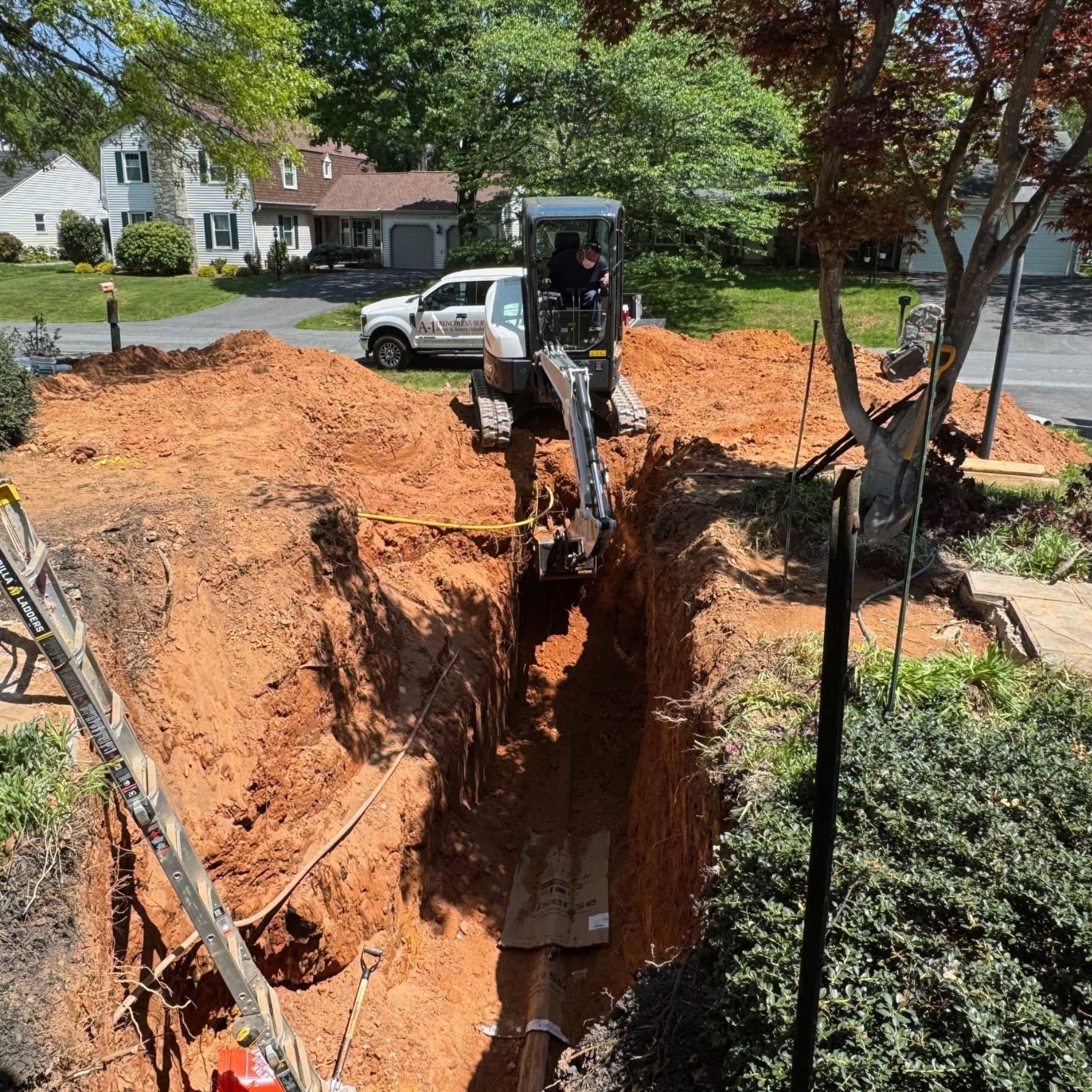
What if you could eliminate the threat of lead in your family’s drinking water without turning your front yard into a construction trench? For many Maryland homeowners, the thought of lead service line replacement triggers two major anxieties: the health of their children and the potential destruction of their property. With the EPA’s 2026 regulations now in full swing, the clock is ticking to address these aging pipes. You deserve a lead-free home, but you shouldn’t have to sacrifice your landscape to get it.
It’s understandable to feel confused by the overlap of federal mandates and local Maryland requirements. We believe that securing your home’s water supply should be a straightforward, stress-free process. This guide will show you exactly how to identify lead pipes, navigate the current 2026 legal landscape, and utilize modern no-dig solutions to protect your family. We’ll preview the latest state funding options and explain how trenchless technology keeps your yard intact while ensuring every drop of water is safe.
Key Takeaways
- Learn how to identify lead pipes in your home using simple DIY tests before the 2027 Maryland inventory deadline.
- Understand the latest 2026 EPA mandates and how they impact your timeline for lead service line replacement.
- Discover the advantages of trenchless technology, which replaces hazardous pipes without the need for destructive property excavation.
- Get a clear roadmap for the replacement process, including the importance of professional video inspections and local utility marking.
- Find out how to navigate Maryland-specific funding and compliance requirements with the help of a modern local expert.
Table of Contents
- The Reality of Lead Service Lines in 2026: Health Risks and Identification
- Navigating 2026 Lead Pipe Regulations in Maryland
- Traditional Excavation vs Trenchless Lead Line Replacement
- Planning Your Replacement: What Homeowners Must Know
- Expert Lead Service Line Solutions with A-1 Trenchless Water & Sewer Repair Services LLC
The Reality of Lead Service Lines in 2026: Health Risks and Identification
The year 2026 marks a turning point for homeowners across Maryland. You might be asking, What is a lead service line? Simply put, it’s the underground pipe that delivers water from the public main into your home’s internal plumbing. While these pipes were once the industry standard, we now know they pose significant health risks. This year is particularly vital because federal regulations under the EPA’s Lead and Copper Rule Improvements have accelerated the timeline for lead service line replacement. Additionally, 2026 is the final year for supplemental federal funding through the Infrastructure Investment and Jobs Act. Acting now ensures you stay ahead of mandates while resources are still available.
There’s no safe level of lead exposure. The EPA maintains a strict zero-level goal because lead is a potent neurotoxin that accumulates in the body over time. In communities like Bethesda and Kensington, where many homes pre-date the 1986 lead ban, the risk remains a daily reality. Lead exposure is particularly dangerous for infants and children, as it can cause permanent developmental delays and behavioral issues. Pregnant women and older adults are also highly vulnerable. Protecting your family starts with knowing exactly what’s buried beneath your lawn.
How to Identify Lead Pipes in Your Home
You don’t need to be a plumber to perform a preliminary check. Start where the water line enters your home, usually in the basement or a utility closet near the water meter. Follow these simple steps to assess your risk:
- The Scratch Test: Use a key or a coin to gently scratch the pipe. If the metal is soft and reveals a shiny, silver color like a new nickel, it’s likely lead.
- The Magnet Test: Grab a refrigerator magnet. If it doesn’t stick to the pipe, that’s a strong indicator of lead. Magnetic pipes are typically made of galvanized steel.
- Check Your Home’s Age: If your home in Montgomery County was built before 1986, there’s a higher probability that lead components were used during construction.
Water Testing vs Visual Inspection
A common mistake is relying solely on a water test. You might receive a “clear” result today, but that doesn’t mean your pipes are safe. Lead doesn’t dissolve uniformly. Instead, it enters the water through a process called “pitting.” Small flakes of lead can break off sporadically. This means one glass of water could be fine while the next contains hazardous levels. A physical inspection of the incoming line is the only way to confirm you’ve eliminated the source of the problem. If you find a dull grey pipe entering your meter, it’s time to consider a professional evaluation and a plan for lead service line replacement.
Navigating 2026 Lead Pipe Regulations in Maryland
The regulatory environment for drinking water is changing rapidly. In late 2024, the federal government finalized the EPA’s Lead and Copper Rule Improvements (LCRI). This landmark update mandates that the vast majority of water systems across the country must identify and replace every lead pipe within a ten-year window. For Maryland residents, the Maryland Department of the Environment (MD, E) has already begun implementing these requirements. Public water systems in our state have until November 2027 to submit their full service line inventories, but the push for lead service line replacement is already accelerating in 2026 as federal funding reaches its peak. Waiting until the end of the decade to address your pipes could mean missing out on current financial incentives.
One of the most common points of confusion for homeowners is where the city’s responsibility ends and yours begins. Typically, the water utility owns the portion of the pipe from the street main to the property line. You own the “private” side that runs from the curb or property line into your house. This distinction is critical for your property value. As we move through 2026, a home with an unverified or lead service line is becoming a liability in the real estate market. Buyers are looking for “lead-free” certifications, and having a documented replacement can be a significant selling point during a home inspection.
Montgomery County Service Line Inventories
If you live in Rockville, Gaithersburg, or surrounding areas, your property may be part of a local inventory list. Utilities like WSSC Water have been working to categorize nearly 500,000 lines. If your home is listed as “material unknown,” you may face stricter disclosure requirements when selling. Fortunately, Maryland has secured over $105 million in federal funding to assist with these costs. Some local programs even offer to cover the customer-owned portion of the line if specific criteria are met. To find out exactly what you’re dealing with, a professional video pipe inspection is the most reliable way to confirm your pipe material and plan your next steps.
The 10-Year Replacement Goal
While the state has until 2037 to complete all replacements, your family’s health can’t wait a decade. Proactive replacement ensures immediate safety and allows you to choose a timeline that works for your schedule. The LCRI mandate requires water systems to replace all lead service lines within 10 years while providing homeowners with transparent data about their water quality. By taking action in 2026, you avoid the inevitable rush and potential price increases that will occur as the 2037 deadline approaches. You gain peace of mind today while ensuring your home remains compliant with evolving environmental standards.
Traditional Excavation vs Trenchless Lead Line Replacement
Choosing the right method for lead service line replacement is just as important as the decision to replace the pipe itself. For decades, the only way to swap out a water line was through traditional excavation. This “old way” involves bringing a backhoe onto your property and digging a deep, continuous trench from the street to your home’s foundation. If your water line runs under a paved driveway, a brick walkway, or a mature oak tree in Bethesda, those features are often lost in the process. You aren’t just paying for the pipe. You’re often paying for the destruction and subsequent rebuilding of your landscape. It’s a high-impact approach that can leave your yard looking like a construction site for weeks.
Trenchless technology offers a modern alternative that prioritizes the preservation of your property. Instead of a long trench, we utilize a method called pipe bursting. This technique involves pulling a new, high-quality pipe directly through the existing lead line. As the new pipe is pulled in, it physically breaks apart the old lead pipe and replaces it in the same path. This allows for a complete lead service line replacement without the need for massive earth-moving equipment. According to the EPA Lead Service Line Information, full replacement is the only way to permanently eliminate lead risks, and trenchless methods make this goal achievable without the headache of a ruined yard.
How Trenchless Water Line Replacement Works
The process is remarkably efficient and clean. We begin by creating two small access points: one at the utility connection near the street and another where the pipe enters your home. A heavy-duty cable is fed through the old pipe and attached to a specialized bursting head. As a hydraulic ram pulls the cable, the bursting head splits the old lead pipe to make room for a new, smooth copper or PEX line. You can explore a deeper dive into these materials in our guide on Water Line Replacement Options.
Property Preservation and Speed
Speed is a major advantage for busy families in Germantown. Traditional digging projects can turn your home into a construction zone for several days, followed by weeks of waiting for new grass to grow or concrete to cure. Trenchless projects are often completed in a single day. You won’t have to worry about your prize-winning gardens or expensive hardscaping being torn apart. While traditional digging leaves you with weeks of landscaping repairs, trenchless methods typically require only a few hours of surface restoration. It’s a cleaner, faster, and more respectful way to upgrade your home’s infrastructure while keeping your curb appeal intact. Before committing to a contractor, it’s worth understanding the full no dig water line replacement cost so you can budget accurately and compare estimates for your Montgomery County property.
Planning Your Replacement: What Homeowners Must Know
Preparation is the difference between a chaotic construction project and a smooth home upgrade. While we handle the heavy lifting and technical logistics, understanding the roadmap helps you feel in control of your home’s safety. A successful lead service line replacement follows a methodical five-step process designed to minimize surprises and maximize efficiency. It begins with a professional video pipe inspection to confirm the exact material and path of your line. If you have ever wondered how to find a blockage in your sewer line, the diagnostic process for water lines is very similar. We use advanced optics to eliminate guesswork before any work begins.
Once the inspection is complete, we move into the logistical phase. This involves securing necessary permits and coordinating with Miss Utility for underground marking. In Maryland, identifying gas and electric lines is a critical safety step that we manage on your behalf. We also communicate with local municipal authorities to schedule your water shut-off. After the physical replacement is finished, we perform an intensive internal plumbing flush and follow up with post-replacement water testing. This final check verifies that your water is safe and that the lead source has been completely removed.
Preparing Your Home for Service
You can help the process move faster by clearing the area around your main water shut-off valve. This valve is usually located in your basement or a utility closet near the front of the house. We typically need about three to four feet of clear workspace to ensure a safe connection. You should also prepare for a water service interruption that lasts approximately 4 to 8 hours. We recommend filling a few buckets for flushing toilets and keeping bottled water on hand for drinking and cooking during this time. If you’re ready to secure your home’s water supply, contact our team of local experts to start your project today.
Post-Replacement Safety Protocols
Even after the new line is installed, you must follow specific safety protocols to clear your internal plumbing. We recommend a “30-Day Flush” to remove any lead particles that might have been jarred loose during the installation. This involves running cold water through high-flow taps, like your bathtub, for 30 minutes immediately after the work is done. You should also repeat a shorter flush daily for the next month. Additionally, unscrew your faucet aerators and clean out any trapped sediment. For maximum peace of mind, use a certified lead-removing water filter for at least six months following the replacement while your home’s internal ecosystem stabilizes.
Expert Lead Service Line Solutions with A-1 Trenchless Water & Sewer Repair Services LLC
A-1 Trenchless Water & Sewer Repair Services LLC stands out as the modern local expert for families across Montgomery County. We understand that your home is your most significant investment. When it comes to lead service line replacement, you shouldn’t have to choose between safe water and a beautiful yard. Our team is deeply rooted in the Damascus community, and we bring a level of care and precision that national utility contractors often lack. We don’t just see a job site. We see a neighbor’s home. By utilizing specialized, no-dig equipment, we ensure that your property remains as pristine as the day we arrived.
Our expertise isn’t limited to water lines. While we are on-site, many homeowners choose to address other aging infrastructure issues to prevent future emergencies. For instance, we often perform pipe descaling to restore the internal diameter of older cast iron sewer pipes. This comprehensive approach to home maintenance ensures that your entire plumbing system is modernized and efficient. Homeowners dealing with slow drains or recurring clogs alongside their water line concerns can also benefit from professional drain cleaning in Montgomery County to address the full scope of their plumbing system’s health. Choosing a locally owned and operated team like A-1 Trenchless Water & Sewer Repair Services LLC means you get a direct line of communication and a partner who is genuinely invested in the safety of our shared community.
Our Commitment to Damascus and Surrounding Areas
Serving Bethesda, Rockville, and Germantown requires a deep understanding of local soil conditions and varied architectural styles. Our trenchless methods save Maryland homeowners thousands of dollars in potential restoration costs by avoiding the destruction of driveways and mature landscaping. We manage the entire process with total transparency. This starts with a high-definition video inspection and concludes with rigorous final testing. You stay informed at every stage, from the initial permit filing with municipal authorities to the moment you turn on your lead-free tap.
Get a Lead-Free Future Today
The 10-year federal deadline for lead service line replacement is a guideline, not a guarantee of immediate safety. Waiting for municipal programs to reach your street can leave your family exposed to hazardous neurotoxins for years. Taking private action in 2026 allows you to secure a lead-free future on your own terms. You gain the immediate peace of mind that comes with a certified replacement and a modernized water system. Don’t let your property become a liability or a statistic in a government inventory list. Schedule your lead line consultation with A-1 Trenchless Water & Sewer Repair Services LLC today. and take the first step toward a healthier, safer home.
Secure Your Home’s Health and Future Value
Ensuring your family has access to clean, safe drinking water is a responsibility that shouldn’t come at the cost of your property’s curb appeal. As we move through 2026, the window for federal funding is narrowing and Maryland’s regulatory requirements are becoming more stringent. By identifying your pipe material early and choosing modern, non-invasive methods, you can eliminate lead risks without the stress of a destroyed landscape. A proactive approach today prevents the urgency of a future mandate or the headache of a failed home inspection when you decide to sell.
A-1 Trenchless Water & Sewer Repair Services LLC has been serving Montgomery County since 2018, providing the local expertise needed to handle complex water line issues. We utilize specialized trenchless pipe bursting technology to replace hazardous lines with minimal disruption. Every project includes an expert video pipe inspection to ensure we have a clear, accurate plan for your property before any work begins. You don’t have to wait for city crews to reach your neighborhood to start living lead-free. Protect your family with a no-dig lead service line replacement from A-1 Trenchless Water & Sewer Repair Services LLC. We’re here to guide you through every step of this vital home upgrade with confidence and care.
Frequently Asked Questions
How do I know if my service line is made of lead?
You can identify lead pipes by checking the point where the water line enters your home. Lead is a dull grey metal that becomes shiny like a new nickel when scratched with a coin. Additionally, magnets won’t stick to lead pipes. If your home was built before 1986, there’s a higher chance your service line contains lead components.
Is the homeowner responsible for lead service line replacement in Maryland?
Yes, Maryland homeowners are typically responsible for the private portion of the line running from the property boundary into the house. While the local utility manages the public side under the 2026 EPA mandates, the owner must address the section on their land. Many jurisdictions offer assistance programs to help cover these private side costs.
How much does lead service line replacement cost in 2026?
The total investment for lead service line replacement depends on the length of the run and the chosen installation method. While traditional excavation requires extensive yard restoration, trenchless methods often provide a more efficient total cost by preserving your landscaping. For a detailed breakdown of what drives professional estimates in Maryland, see our 2026 homeowner’s pricing guide for no dig water line replacement cost. You should also check with local Maryland authorities to see if you qualify for state-backed funding or rebates available this year.
Can I just use a water filter instead of replacing the lead pipe?
Water filters are a temporary safety measure but don’t solve the underlying problem. While certain certified filters can remove lead, the EPA recommends full source removal as the only permanent solution. Relying on filters alone requires constant maintenance and doesn’t eliminate the risk of lead flakes entering your water during plumbing disturbances or pressure changes.
What is the “no-dig” method for replacing a water line?
The no-dig method, or trenchless pipe bursting, replaces your old line without digging a long trench across your yard. We create two small access points and pull a new, smooth pipe directly through the old lead one. This modern technique preserves your driveway, gardens, and porches while providing a durable, high-quality replacement in a fraction of the time.
Will replacing my lead service line fix my low water pressure?
Replacing an old lead line often results in improved water pressure throughout your home. Lead pipes are frequently smaller in diameter than modern copper or PEX lines. By installing a larger, smooth-walled pipe, you increase the volume of water available to your fixtures. This upgrade eliminates the flow restrictions common in aging, narrow lead service lines.
How long does the replacement process typically take?
Most trenchless lead service line replacement projects are completed in a single day. While traditional digging can turn your property into a construction zone for nearly a week, our modern methods allow us to restore your water service within 4 to 8 hours. This efficiency minimizes the disruption to your daily routine and ensures your family has safe water by dinner time.
What should I do immediately after my lead line is replaced?
You should perform a high-flow flush of your internal plumbing immediately after the work is finished. Open all cold water taps for at least 30 minutes to clear any sediment or particles disturbed during installation. It’s also vital to clean your faucet aerators and continue using a lead-certified filter for several months to ensure total safety. Homeowners in the region who want to maintain their entire plumbing system after a water line upgrade can also explore expert drain cleaning Montgomery County services to keep their drainage lines clear and functioning properly.
First published . Written by the A-1 Trenchless team.