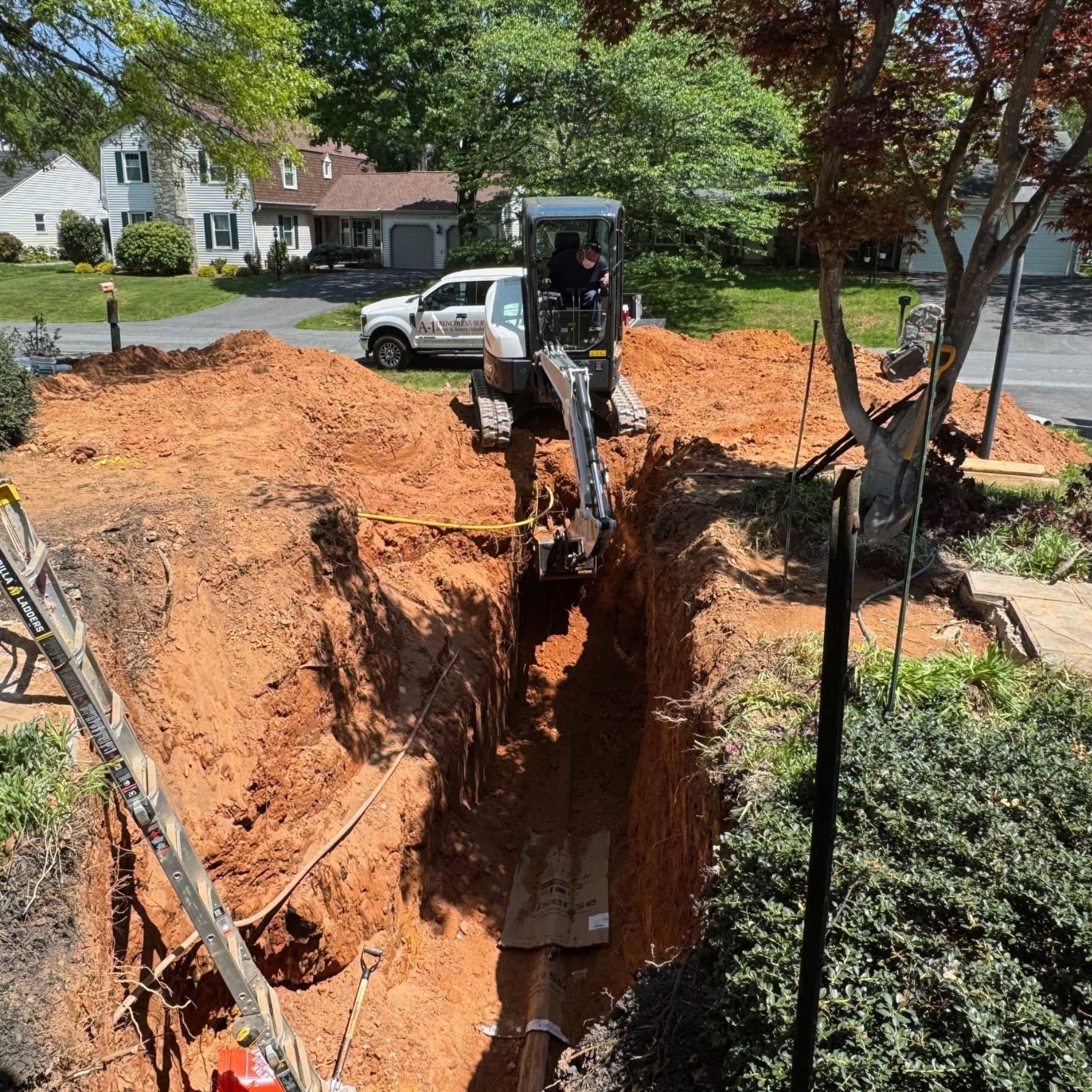
A water line problem usually shows up at the worst possible time, low pressure before work, a wet patch in the yard after heavy use, or a sudden spike in the water bill that does not make sense. When the pipe running from the main supply to your home starts failing, trenchless waterline replacement can often solve the problem without tearing up the entire property.
For homeowners and property managers, that matters. The old approach often meant long trenches through lawns, sidewalks, landscaping, and sometimes driveways. A trenchless method is designed to reduce that disruption while still replacing the damaged line with a durable new pipe. It is not magic, and it is not the right fit for every job, but in many cases it is the faster, cleaner, and more practical option.
What trenchless waterline replacement actually means
Trenchless waterline replacement is a method of replacing an underground water service line with minimal excavation. Instead of digging a continuous trench from one end of the pipe to the other, the contractor typically uses one or two access points and specialized equipment to install the new line underground.
The goal is straightforward: restore reliable water service while protecting as much of the property as possible. That can be a major advantage if the existing line runs under mature landscaping, hardscaping, fencing, parking areas, or other features that are expensive to remove and rebuild.
In many residential jobs, the process begins with locating the existing line, identifying the damaged section or overall condition, and checking soil conditions, pipe depth, and utility conflicts. From there, the contractor determines whether a trenchless replacement method is possible or whether traditional excavation is the better choice.
Why property owners ask for trenchless waterline replacement
Most people are not looking for underground pipe work until something has already gone wrong. The question is usually less about the technology and more about the outcome. They want the leak fixed, the water pressure restored, and the property left in decent shape when the job is done.
That is where trenchless methods stand out. Less digging often means less damage to lawns, less mess around the property, and less time spent on restoration after the pipe work is complete. For some properties, that savings can be just as meaningful as the pipe replacement itself.
There is also the issue of speed. A trenchless project can often move faster than a traditional full excavation because there is less demolition and less reconstruction involved. That does not mean every job is quick or simple. Access challenges, local code requirements, and unexpected underground conditions can still affect the timeline. Still, minimizing excavation usually helps keep the project moving.
Signs your water line may need replacement
Some water lines can be repaired. Others are too deteriorated, too fragile, or too failure-prone to justify another patch. If problems keep coming back, replacement may be the smarter investment.
Common warning signs include recurring leaks, unexplained wet areas in the yard, muddy spots near the service line path, a sudden drop in water pressure, discolored water, or a noticeable increase in the water bill. Older galvanized or corroded lines are also common candidates for replacement, especially when the pipe material is already near the end of its service life.
If a line has failed once, that does not always mean the whole pipe must be replaced. But if the line has multiple weak points, significant corrosion, or material issues that make future failures likely, replacing it can save money and frustration over time.
How the process usually works
Every property is different, but the general process follows a clear sequence. First, the contractor confirms the source of the problem and maps out the existing line. This may involve leak detection, pressure testing, and camera-based inspection where applicable.
Next comes planning. The crew identifies entry and exit points, checks for nearby utilities, and determines the best installation path. In a trenchless replacement, those access points are much smaller than a full open trench, but they still need to be placed carefully.
Once the site is prepared, the old line may be replaced using trenchless equipment that pulls or installs the new pipe underground. The exact method depends on the layout, pipe condition, and local conditions. After installation, the new line is tested to confirm proper flow, pressure, and integrity before final connection and site cleanup.
For the customer, the biggest difference is what you do not see, a long open trench running across the property. That reduced disruption is the main reason many owners ask about trenchless options first.
When trenchless waterline replacement makes the most sense
This approach is especially useful when the existing line runs beneath valuable or difficult-to-repair surfaces. A landscaped front yard, decorative hardscape, concrete walkway, retaining wall area, or commercial access drive can all make full excavation more expensive and disruptive.
It can also be a strong option when time matters. If the goal is to restore service quickly while minimizing downtime for a home, business, or occupied facility, trenchless replacement may offer a more efficient path.
That said, it depends on site conditions. Some lines are too shallow, too severely collapsed, poorly located, or too obstructed by other utilities for a trenchless method to work well. In those cases, conventional excavation may still be the safest and most reliable choice. A trustworthy contractor should explain that clearly instead of forcing a trenchless solution where it does not belong.
The trade-offs to understand before you decide
Trenchless waterline replacement offers real advantages, but it is not automatically the lowest-cost option in every situation. Specialized equipment, planning, and installation methods can change the price compared to standard digging. On the other hand, when you factor in the cost of repairing sod, landscaping, sidewalks, or pavement, trenchless work can be very competitive.
There is also a practical trade-off between access and certainty. Trenchless methods reduce surface disruption, but they rely on accurate diagnostics and the right underground conditions. A full excavation gives total visual access to the pipe path. Trenchless work depends more heavily on planning, utility locating, and experienced execution.
That is why the contractor matters as much as the method. The right team should be able to assess the line honestly, explain whether trenchless replacement is feasible, and offer a clear recommendation based on the property rather than a one-size-fits-all sales pitch.
What to ask before approving the job
Before moving forward, ask what material is being installed, how the crew will verify the condition of the existing line, and what restoration will still be required at the access points. You should also ask about permits, code compliance, expected timeline, testing procedures, and whether financing is available if the repair is urgent.
It is also reasonable to ask what could change the price once work begins. Underground utility jobs sometimes reveal hidden conditions, and a dependable contractor will be upfront about that. Clear communication on the front end helps avoid surprises later.
For local property owners, working with a company that understands area conditions, permitting expectations, and older utility infrastructure can make the process much smoother. A-1 Trenchless Water & Sewer Repair Services LLC focuses on practical underground solutions that reduce disruption whenever possible while keeping the work code-compliant and dependable.
Why experience matters more than the sales pitch
Water line replacement is not just about installing pipe. It is about diagnosing the problem correctly, choosing the right method, protecting the property, and getting the system back online with confidence. A fast response matters, but so does workmanship.
Experienced crews know how to evaluate whether trenchless is a smart fit or whether traditional excavation will produce a better result. They also know that homeowners are not looking for technical jargon. They want a straight answer, a fair price, and a repair that holds up.
If your water line is showing signs of failure, the best next step is not to guess. It is to have the line properly evaluated so you can understand your options before a small issue turns into a major one. The right solution should restore your water service, protect your property where possible, and give you one less thing to worry about.
First published . Written by the A-1 Trenchless team.