A sewer backup rarely starts as a dramatic emergency. It may begin with a slow kitchen drain, a toilet that gurgles after flushing, or a sour odor near the basement. When those warnings point to a damaged underground line, property owners need more than a quick patch. Understanding the best sewer repair methods helps you make a confident decision that protects your home, business, yard, and budget.
The right repair is not always the same repair. A cracked section of pipe may be a strong candidate for trenchless restoration, while a collapsed line or severe belly may require excavation. The first step is finding the real condition of the pipe, not guessing based on the symptoms above ground.
Start With a Camera Inspection, Not a Guess
Sewer problems can come from several causes: root intrusion, aging cast iron, shifted clay tile, corrosion, grease buildup, construction damage, or a line that no longer has the proper slope. Similar symptoms can have very different solutions.
A professional video camera inspection allows a technician to see inside the sewer line, locate the trouble spot, identify the pipe material, and determine whether the issue is isolated or spread throughout the system. The inspection can also reveal whether heavy scale, roots, or debris need to be removed before a repair can hold.
For many properties, cleaning is part of the diagnostic process. Hydro jetting can clear grease, sludge, and roots from an appropriate pipe, while descaling can remove hard mineral buildup and corrosion from older cast-iron lines. Cleaning restores flow, but it does not repair a broken pipe. Once the line is clear enough to inspect, the repair recommendation can be based on evidence rather than assumptions.
Best Sewer Repair Methods for Common Pipe Failures
Trenchless pipe lining
Cured-in-place pipe lining is often one of the least disruptive options for a pipe that is cracked, leaking, root-damaged, or deteriorating but still generally intact. After the line is cleaned and prepared, a resin-saturated liner is installed inside the existing pipe. The material cures to create a new, jointless pipe within the old one.
The major advantage is property protection. In many cases, the work can be completed through small access points instead of a long trench across a lawn, driveway, patio, or finished basement. That can reduce restoration work and help shorten the overall project timeline.
Lining is not the answer to every problem. The original pipe needs enough structural shape for the liner to be installed properly. A fully collapsed section, a severe offset, or a pipe with major standing-water issues may not be suitable. Because the new liner slightly reduces the inside diameter, proper evaluation also matters for lines that are already undersized.
Pipe bursting
Pipe bursting is a trenchless replacement method used when the existing sewer pipe is too damaged to line but a new pipe can be pulled through the same path. A bursting head breaks apart the old pipe while pulling new, durable pipe into place behind it.
This method can be an excellent choice for failed clay, cast iron, Orangeburg, or other aging materials. It replaces the damaged line rather than coating its interior, and it usually requires only entry and exit pits instead of opening the full length of the sewer route.
Pipe bursting has limits. Nearby utility lines, shallow depth, unstable soil conditions, unusual pipe routing, or certain connections can affect whether it is appropriate. A qualified underground plumbing contractor should verify utility locations and assess the full route before recommending it.
Targeted spot repair
When a camera inspection identifies one clearly damaged area and the rest of the line is in good shape, a targeted repair may offer the most practical value. The contractor excavates only the affected section, removes the failed pipe, and installs a new section with properly sealed connections.
Spot repair can make sense after accidental damage, a localized root break, or a small collapsed area. It avoids replacing pipe that still has useful life. The trade-off is that an older line with multiple weak points may continue to develop problems elsewhere. In that situation, a short-term repair can become a series of future excavations.
Conventional sewer line replacement
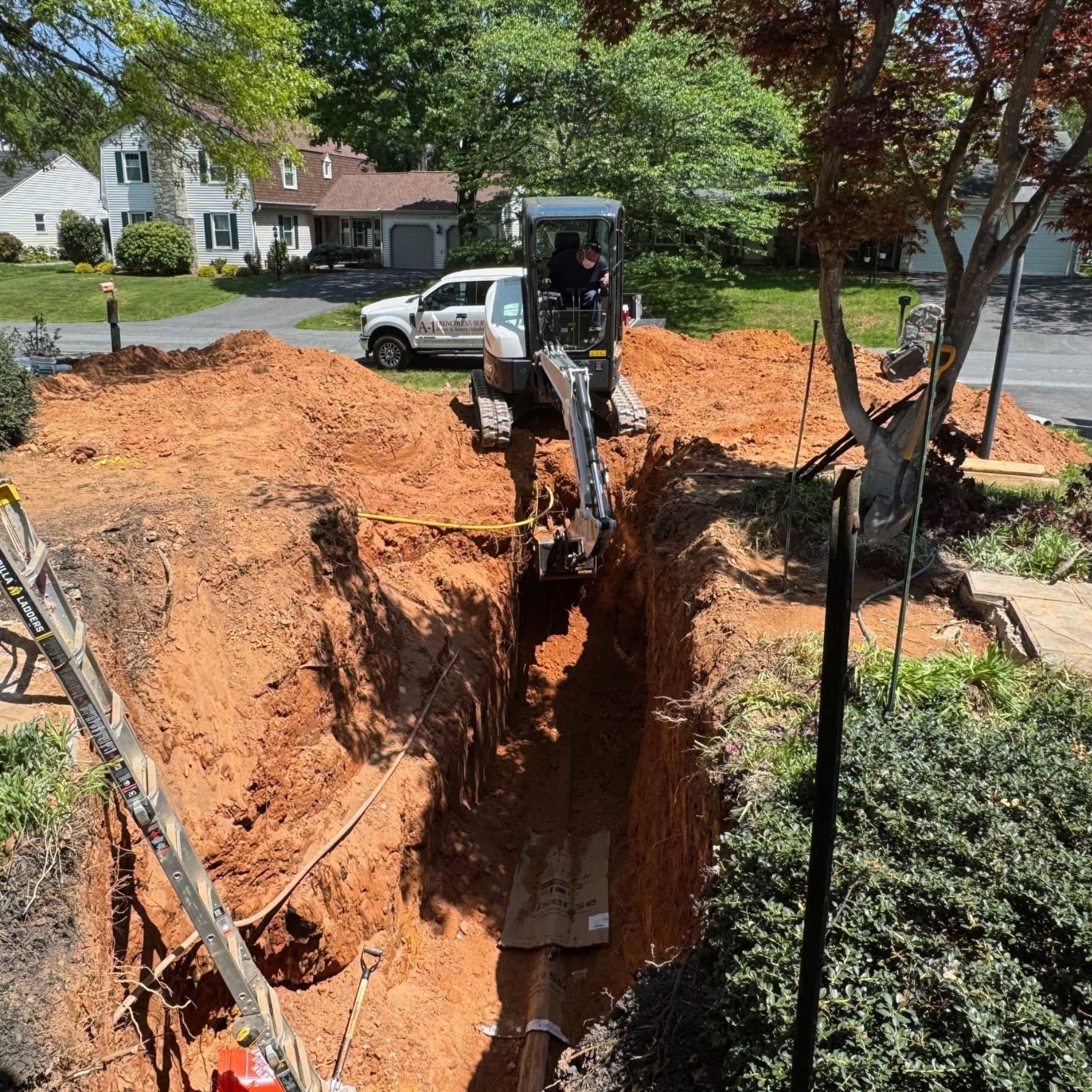
Traditional excavation remains one of the best sewer repair methods when the line has severe collapse, extensive offset joints, major slope problems, or a route that cannot be safely addressed with trenchless equipment. It is also the right choice when the pipe needs to be rerouted or when access conditions make a direct replacement more reliable.
Excavation does involve more surface disruption, but it provides complete access to the sewer line. That allows the contractor to correct grade, replace damaged fittings, address improper prior work, and install a new pipe system built for long-term performance.
A dependable contractor will not present excavation as a failure of modern technology. It is a proven method, and sometimes it is the clearest path to a lasting solution. The goal is not to avoid digging at all costs. The goal is to choose the repair that solves the actual problem with the least unnecessary disruption.
How to Choose the Right Method
The best choice depends on the pipe’s condition, location, material, depth, and history of backups. A line beneath mature landscaping, a driveway, or a commercial parking area may make trenchless options especially valuable. A line that has repeatedly backed up in several locations may justify full rehabilitation rather than another isolated repair.
Age also matters. Older cast-iron pipes can develop interior scaling that restricts flow even before they crack. Clay tile lines often allow roots to enter through joints. Orangeburg pipe can deform and deteriorate over time. Each material fails differently, which is why a camera inspection and accurate locating are so important.
Property owners should also think beyond the immediate backup. Ask whether the proposed method addresses the cause of the failure, how much restoration is expected, whether permits are needed, and what warranty applies to the work. A lower upfront price is not always the lower long-term cost if it leaves failing pipe in place or requires repeated emergency service.
Warning Signs That Should Not Wait
Sewer line damage can create unsanitary conditions and lead to greater property damage if it is ignored. Call for a professional evaluation when you notice multiple drains slowing down at once, frequent toilet backups, gurgling fixtures, sewage odors, wet patches in the yard, unusually green grass over the sewer route, or water backing up from a floor drain.
For commercial properties, watch for recurring restroom closures, slow drains across multiple fixtures, or backups during busy periods. Those problems can affect operations, customers, and employee safety. Fast diagnosis helps facility managers plan repairs before a small restriction becomes a full service interruption.
Avoid relying on repeated chemical drain cleaners for suspected sewer line issues. These products may not reach the underlying break or root intrusion, and harsh chemicals can be hard on certain older plumbing systems. Temporary drain clearing has its place, but recurring symptoms deserve a camera-based answer.
What Dependable Sewer Repair Looks Like
A quality sewer repair process is clear from the beginning. You should receive an explanation of what the camera found, why a particular method is recommended, what access will be needed, and what the work will mean for your property. For urgent repairs, financing options can also make it easier to move forward before damage grows.
At A-1 Trenchless Water & Sewer Repair Services, the focus is on using advanced inspection and trenchless technology where it makes sense, while providing conventional sewer work when that is the better solution. Licensed, insured workmanship and straightforward communication matter just as much as the equipment used on the job.
A sewer line is easy to forget when it is working properly. If yours is sending warning signs, acting early gives you more options, more control over costs, and a better chance of preserving the property you have worked hard to maintain.
First published . Written by the A-1 Trenchless team.