What if you could permanently fix a collapsed sewer line without a single excavator touching your prize-winning hydrangeas or your custom-paved driveway? Most homeowners dread the call for sewer work because it typically signals a week of heavy machinery, massive piles of dirt, and the high cost of restoring your yard. It’s a stressful situation that feels like a choice between a functional home and a beautiful landscape. However, modern trenchless technology has changed the industry. Today, sewer repair without digging lawn is the standard for homeowners who want to preserve their property’s curb appeal while securing a long-term solution for their pipes.
You don’t have to sacrifice your mature trees or deal with weeks of construction noise to get your plumbing back in order. In this guide, we’ll show you how advanced pipe lining and bursting techniques provide a permanent fix with zero visible damage to your yard. We’ll also explain how these methods fit into the WSSC’s current Sustainable Sewer Solutions (S3) Program standards for Montgomery County. You’ll learn why this surgical approach is significantly faster than traditional digging and how to ensure your project meets all local permitting requirements for a smooth, hassle-free experience.
Key Takeaways
- Discover how sewer repair without digging lawn eliminates the hidden costs of replanting gardens or repaving driveways after a pipe failure.
- Learn how modern technicians use high-definition video inspections and existing access points to fix your lines from the inside out.
- Compare pipe lining and pipe bursting to determine which surgical method best protects your mature trees and property features.
- Identify the specific property conditions, such as pipe collapse severity and cleanout locations, that make your home a candidate for no-dig solutions.
- Understand how specialized trenchless technology completes repairs significantly faster than traditional excavation methods.
Table of Contents
- The True Cost of Traditional Sewer Excavation on Your Maryland Property
- How Trenchless Technology Repairs Sewer Lines Without Ruining Your Yard
- Comparing Trenchless Methods: Pipe Lining vs Pipe Bursting for Landscape Preservation
- Is Your Property a Candidate for No-Dig Sewer Repair?
- Choosing A-1 Trenchless for Your Montgomery County Sewer Restoration
The True Cost of Traditional Sewer Excavation on Your Maryland Property
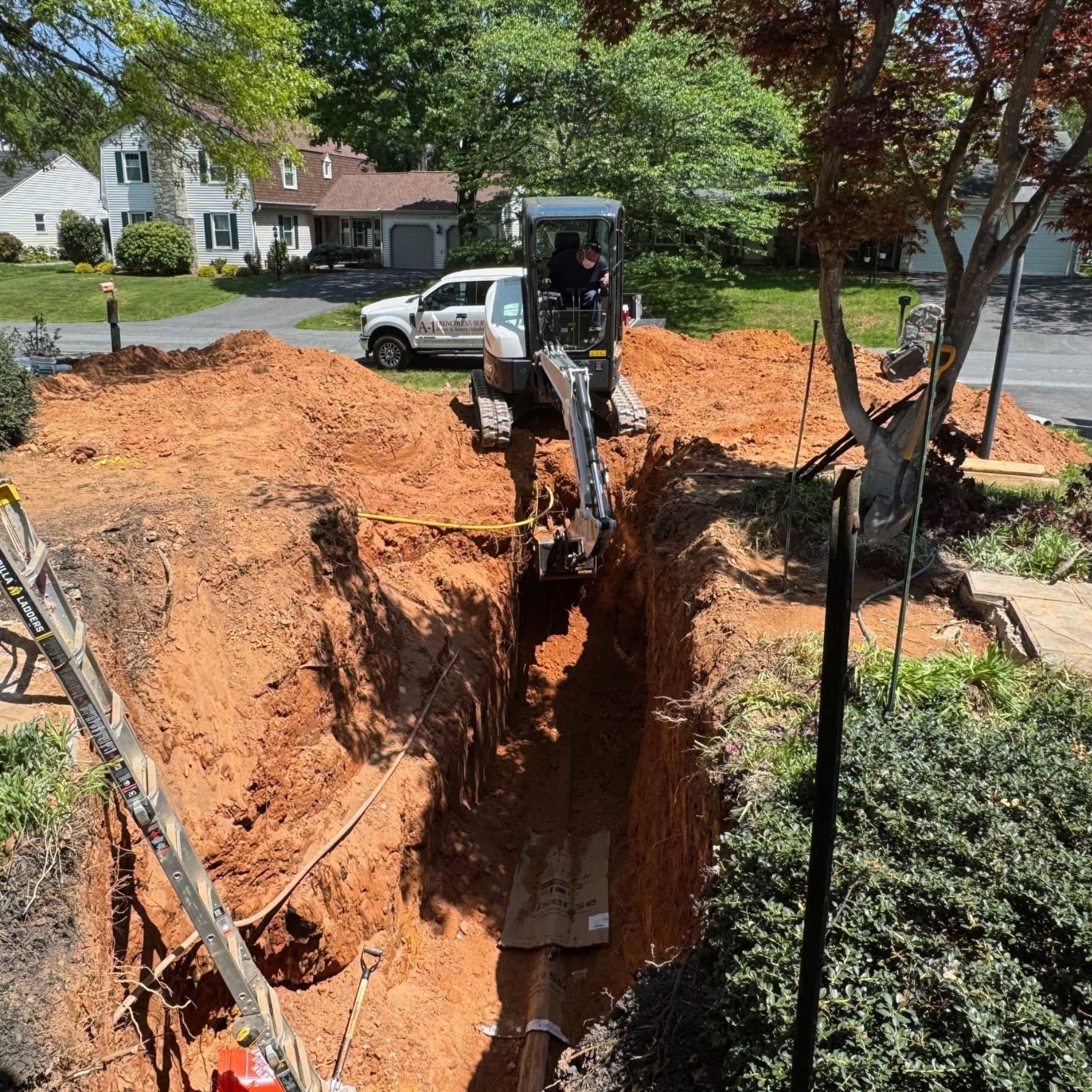
Traditional sewer repair is essentially a major construction project staged in your front yard. This method, often called “open-cut” excavation, requires a team to dig a trench between six and ten feet deep along the entire length of your sewer line. While this was once the only way to address a broken pipe, it creates a massive amount of collateral damage. You aren’t just paying for a pipe fix. You’re paying for the destruction of everything sitting above that pipe. By contrast, modern sewer repair without digging lawn focuses on surgical precision rather than brute force.
Many homeowners are surprised to find that their initial plumbing quote doesn’t include the “hidden” restoration bill. Standard excavation contracts typically cover the pipe replacement and the backfilling of the trench with dirt, but they rarely include the cost of new sod, professional landscaping, or repaving. If your sewer line runs under a sidewalk or a custom-paved entrance, you could be looking at thousands of dollars in extra expenses just to return your property to its original state. Choosing Trenchless Technology allows you to bypass these secondary costs entirely by keeping the surface of your property undisturbed.
The timeline difference is also significant. A traditional excavation project can turn your home into a work zone for several days or even a week. Heavy machinery creates constant noise, and open trenches present a safety hazard for children and pets. Most trenchless projects are completed in a single day, often within just a few hours. This speed is a primary reason why sewer repair without digging lawn has become the preferred choice for busy Maryland families who want to solve the problem and move on with their lives.
Why Montgomery County Soil Makes Digging a Nightmare
The soil in areas like Damascus and Bethesda is notorious for its heavy clay content. Clay is incredibly dense and holds moisture, which makes manual or machine digging difficult and messy. During wet Maryland seasons, these deep trenches are prone to collapses and “sloughing,” where the sides of the hole cave in. Even after the job is done, clay is difficult to re-compact properly. If the soil isn’t packed back perfectly, it will eventually settle, leading to yard sinkholes or cracks in your driveway months after the plumber has left.
Landscape Assets at Risk During Standard Repairs
Your property’s value is tied directly to its curb appeal. Mature heritage oaks and maples are particularly vulnerable because their critical root zones often extend right where the sewer line sits. A ten-foot trench can sever major root systems, effectively killing a tree that took decades to grow. Beyond trees, traditional digging threatens expensive hardscaping like stone walkways and retaining walls. We specialize in sewer line repair under driveway surfaces, ensuring your high-end finishes remain perfectly intact while we restore the infrastructure beneath them.
How Trenchless Technology Repairs Sewer Lines Without Ruining Your Yard
Trenchless technology isn’t magic, but it certainly feels like it to a homeowner facing a major sewer crisis. The entire process hinges on the “Access Point” concept. Instead of opening a massive trench, we utilize existing openings in your plumbing system, known as cleanouts. These are typically located in your basement or near the edge of your property. By entering the system here, we perform a full sewer repair without digging lawn surfaces or disturbing your landscaping. It’s a surgical approach that focuses on the pipe, not the dirt above it.
Success in trenchless repair requires extreme diagnostic precision. We don’t guess where a problem is. We see it. Every job begins with a high-definition video camera inspection. This allows us to identify the exact location of cracks, root intrusions, or offsets. Once we have a clear visual, we use hydro jetting to scour the old pipe. This high-pressure water treatment removes decades of debris and creates a perfectly clean bonding surface for the new liner. The materials used in 2026 are specifically engineered to resist root penetration and chemical corrosion, often outlasting the original host pipe by decades.
The Preparation Phase: Descaling and Cleaning
Before we can install a new liner, the existing pipe must be pristine. For many older homes in Maryland, this involves understanding what is pipe descaling and why it matters for cast iron systems. Descaling removes the rough “scales” of rust that catch debris. We then utilize professional hydro jetting services in Damascus to blast away any remaining obstructions. Finally, we verify the path by using a specialized camera to find blockage in sewer line segments, ensuring the pipe is ready for the lining process. If you’re unsure which cleaning method is best suited for your specific pipe condition, our guide on pipe descaling vs hydro jetting breaks down the critical differences to help you make the right choice for your Maryland home.
CIPP: Creating a ‘Pipe Within a Pipe’
Cured-In-Place Pipe (CIPP) is the primary method used for sewer repair without digging lawn areas. We insert a flexible felt sleeve saturated with a high-strength epoxy resin into the old pipe. Once positioned, we inflate the sleeve so it presses firmly against the interior walls of the existing line. Over several hours, the resin undergoes a chemical reaction and hardens into a smooth, jointless pipe. This “pipe within a pipe” follows the exact path of your original line, meaning your flower beds and gardens remain completely untouched. If you are noticing slow drains, scheduling a professional inspection can help you catch these issues before a total collapse occurs. The same high-pressure hydro jetting technology we use for residential lines is also the backbone of effective commercial kitchen drain cleaning, where grease buildup and heavy daily use demand equally powerful solutions.
Comparing Trenchless Methods: Pipe Lining vs Pipe Bursting for Landscape Preservation
Choosing the right technology depends entirely on the current state of your pipes and the specific layout of your property. While both methods provide a reliable sewer repair without digging lawn surfaces, they differ in their mechanical approach and the level of access required. Pipe lining is often the first choice for homeowners with intricate gardens or flower beds because it is the least invasive. It typically utilizes a single access point, such as an existing cleanout, to fix the line from the inside. This makes it a surgical solution for pipes that have cracks or root intrusions but still maintain their basic shape.
Pipe bursting is the “heavy lifter” of trenchless technology. Instead of creating a new pipe inside the old one, it physically replaces the old line by pulling a high-density polyethylene (HDPE) pipe through the existing path. A specialized “bursting head” shatters the old pipe and pushes the fragments into the surrounding soil. While this method requires two small access pits, one at each end of the run, it is still a form of sewer repair without digging lawn trenches. It remains the superior option when you need to increase the diameter of your sewer line or when the original pipe has completely corroded away. Regardless of the method chosen, both solutions are engineered to withstand Maryland’s shifting clay soils for over 50 years.
When to Choose Pipe Lining
Pipe lining is ideal for segments that are structurally sound but suffer from leaks, pinholes, or persistent root blockages. It is the best choice for preserving surface-level landscaping because it eliminates the need for any digging near foundation walls or expensive hardscaping. If your pipe has not collapsed, this “pipe-within-a-pipe” approach offers the fastest path back to normalcy. For a more detailed look at the technical specifications, you can read our pipe bursting vs pipe lining comparison guide.
When Pipe Bursting is the Better Option
There are times when the original pipe is too far gone for a liner to bond correctly. This is common with old Orangeburg pipes or severely thin cast iron. Pipe bursting allows us to install a brand-new, smooth pipe without the massive destruction of traditional excavation. We manage the small entry and exit pits with extreme care, often placing them in inconspicuous areas to minimize the impact on your turf. This method is also the preferred way to upsize a line if your household’s water demands have grown over time.
Is Your Property a Candidate for No-Dig Sewer Repair?
While most Maryland properties are perfect candidates for trenchless solutions, a few technical factors determine the final approach. The most critical element is the structural state of your existing pipe. If your sewer line has completely collapsed or “pancaked,” a felt liner cannot be threaded through the void. In these rare cases, a total sewer repair without digging lawn might not be possible without some minor excavation to clear the path. Even with a severe collapse, we can often use pipe bursting to shatter the old line and pull a new one through, keeping your landscape mostly untouched.
Access points are another practical consideration. Most modern homes in Damascus or Bethesda have a sewer cleanout, which is a capped pipe providing direct access to the main line. If your home lacks one, we can often install a cleanout in an inconspicuous corner of your yard. This small, one-time investment enables us to perform a full sewer repair without digging lawn and provides a permanent access point for any future maintenance or cleaning needs.
The material of your current pipe also dictates the method. Clay and cast iron are classic candidates for lining because the epoxy resin bonds exceptionally well to their porous or textured surfaces. PVC pipes are generally durable, but they can experience joint failures or “offset” sections due to shifting soil. In these cases, we assess whether a liner can bridge the gap or if pipe bursting is needed to reset the line’s alignment. Understanding the distinction between pipe descaling vs hydro jetting is also essential at this stage, as the right preparation method depends heavily on your pipe’s material and condition.
Technical Requirements for Trenchless Success
Gravity does the heavy lifting in your sewer system. For a liner to function correctly, the original pipe must maintain a consistent “fall” or slope. If your pipe has developed “bellies,” which are low spots where water and debris pool, a simple liner might not fix the underlying drainage issue. A professional video inspection is the only way to verify these levels before work begins. This is why many savvy buyers schedule a sewer line inspection for home purchase to ensure they aren’t inheriting a system with structural defects that trenchless tech can’t fully resolve.
Obstacles That May Require Hybrid Solutions
Maryland’s unique geology often presents challenges like dense rock formations or shifting clay. In some neighborhoods, utility lines for gas or water might cross too close to the sewer path for certain bursting heads. When these obstacles appear, we often recommend a hybrid solution. This might involve a small “spot repair” to fix a single problematic joint or belly, followed by a full-length liner to seal the rest of the system. This approach still saves your driveways and mature trees while ensuring the pipe is perfectly functional. If you aren’t sure where your line stands, you can schedule a video pipe inspection to see exactly what’s happening underground.
Choosing A-1 Trenchless for Your Montgomery County Sewer Restoration
Selecting a partner for your home’s infrastructure requires a balance of technical skill and local accountability. We focus on providing high-quality results for homeowners in Damascus, Bethesda, and Germantown who refuse to settle for the destruction of traditional excavation. Our team understands the specific permitting requirements of the Washington Suburban Sanitary Commission (WSSC), ensuring that every project is compliant with regional standards. When you choose A-1 for your sewer repair without digging lawn, you are investing in a process that prioritizes your property’s long-term health and your family’s peace of mind.
The A-1 process is methodical and transparent. We begin with a high-definition video diagnostic to map your system’s unique challenges. Once we identify the problem, we use specialized cleaning tools to prep the line. After the trenchless repair is complete, we perform final pressure testing to verify the structural integrity of the new pipe. This thorough approach ensures the fix is permanent. We don’t just patch a leak. We restore your entire sewer lateral to a condition that often exceeds the original installation. Our commitment is simple: we leave your yard exactly as we found it.
Transparent pricing is a cornerstone of our service. While traditional plumbing quotes might look lower on paper, they often omit the massive costs of replacing sod, repaving driveways, or hiring arborists to save damaged trees. Our “no-dig” quotes provide better long-term value because they cover the entire solution from start to finish. You won’t have to manage multiple contractors or deal with a torn-up yard for weeks. We provide a single, comprehensive price for a surgical repair that protects your landscape assets.
The Modern Local Expert Advantage
We invest heavily in the latest 2026 trenchless equipment and industrial-grade resins to provide the most reliable service in Maryland. Our neighborly approach means we treat your lawn like it’s our own, taking extra care around your gardens and hardscaping. As local experts, we stay ahead of industry advancements to offer you the most efficient solutions available. For a deeper look at how we serve our community, check out our Pillar Guide to Trenchless Sewer Repair in Damascus.
Get Started with a No-Obligation Inspection
The first step toward a functional sewer system is a professional diagnostic. During your on-site consultation, we use our HD cameras to show you exactly what is happening inside your pipes. We’ll explain your options clearly and help you determine if your property is a candidate for a sewer repair without digging lawn. There is no guesswork involved. Just clear facts and modern solutions. Contact A-1 Trenchless today for a yard-saving sewer solution.
Secure Your Property’s Future with Trenchless Innovation
Sewer problems don’t have to result in a destroyed yard or a mountain of restoration bills. By choosing modern trenchless methods, you ensure a permanent fix while keeping your mature trees and custom hardscaping perfectly intact. We’ve seen how HD video diagnostics and professional pipe descaling provide the precision needed for a smooth, long-term repair. These techniques aren’t just faster. They offer superior value by eliminating the “hidden” costs of traditional excavation.
Our team is specialized in Damascus and Bethesda properties, bringing a 5-star local reputation for property preservation to every job. We understand that your home is your biggest investment, and we treat your landscape with the respect it deserves. If you’re ready for a sewer repair without digging lawn surfaces, we’re here to provide a steady, expert hand throughout the process.
Save Your Lawn, Schedule Your Trenchless Sewer Inspection Today.
Take the stress out of your home maintenance and enjoy the peace of mind that comes with a surgically restored sewer system. Your landscape will thank you.
Frequently Asked Questions
Is sewer repair without digging really permanent?
Yes, modern trenchless repairs are designed to be a permanent solution for your home’s infrastructure. The epoxy resins used in pipe lining cure into a high-strength material that is rated to last 50 years or more. These materials are incredibly durable and resistant to both chemical corrosion and root intrusion, often outlasting the original host pipe that was installed when your home was built.
How much does trenchless sewer repair cost in Maryland compared to digging?
While the plumbing labor and materials for trenchless work are often comparable to traditional methods, the total project cost is usually much lower. Traditional digging requires you to pay for heavy machinery and then face a second bill for landscaping, sod, or driveway restoration. By choosing trenchless technology, you eliminate those expensive “hidden” restoration costs, making it the more cost-effective choice for property preservation.
Can you use trenchless methods if tree roots have already broken the pipe?
Yes, tree roots are one of the most common problems we solve with trenchless technology. We first use professional hydro jetting to clear the roots and debris from the line. Once the pipe is clean, we install a smooth liner that seals any existing cracks or breaks. This creates a jointless barrier that makes it virtually impossible for roots to re-enter the system in the future.
Will trenchless repair work under my concrete driveway or patio?
Absolutely. This is the primary reason many homeowners choose sewer repair without digging lawn or hardscape areas. Because we access the sewer line through existing openings or small pits, we can repair or replace pipes located directly beneath concrete slabs, patios, and custom-paved driveways. You won’t have to deal with the stress or expense of breaking and replacing your high-end outdoor surfaces.
How long does a ‘no-dig’ sewer repair project typically take to complete?
Most trenchless sewer projects are completed in a single day. While traditional excavation can turn your property into a construction zone for a week or longer, our team can often have your system back in full operation within 24 hours. This efficiency minimizes the time your water needs to be shut off and ensures your daily routine returns to normal as quickly as possible.
Do I need a special permit for trenchless sewer work in Montgomery County?
Yes, most significant sewer repairs in Montgomery County require a permit from the Washington Suburban Sanitary Commission (WSSC). The WSSC is the primary authority for water and sewer regulations in our region. It’s important to note that this work must be performed by a WSSC-licensed plumber to ensure the repair meets all local codes and passes the necessary inspections.
Is hydro jetting safe for the old pipes being repaired?
Hydro jetting is safe for most pipes when it’s performed by an experienced professional. We always begin the process with a high-definition video inspection to assess the structural integrity of your line. This allows us to calibrate the water pressure to a level that effectively removes blockages and scale without causing any further damage to the host pipe before the lining process begins. Business owners dealing with heavy grease loads may also want to explore our guide to commercial kitchen drain cleaning to understand how the same hydro jetting principles apply to high-volume food service environments.
What happens if my sewer line is completely collapsed?
If a pipe is completely flat or “pancaked,” a traditional liner cannot be inserted. However, you may still be a candidate for pipe bursting, which uses a mechanical head to break apart the old pipe and pull a new one through the same path. In cases where the path is entirely blocked by a collapse, we can often perform a small “spot repair” at the point of failure and then use trenchless methods for the rest of the line.
First published . Written by the A-1 Trenchless team.