A shower that suddenly feels weak, a washing machine that takes too long to fill, or a faucet that barely rinses a plate can point to more than an everyday inconvenience. What causes low water pressure can range from a simple clogged aerator to a damaged underground water line. Finding the source quickly matters because some pressure problems are minor, while others can signal a leak that is wasting water beneath your property.
Low pressure is not always the same as low water flow. Pressure is the force pushing water through your pipes, while flow is the amount of water reaching a fixture. A restriction inside a faucet can reduce flow at one location even when the home’s overall pressure is normal. When several fixtures are affected, the problem is more likely in the plumbing system, supply line, pressure regulator, or municipal connection.
What Causes Low Water Pressure at One Fixture?
When only one sink, shower, or appliance has weak water flow, start with the fixture itself. Mineral deposits, sediment, and small debris can build up inside faucet aerators and showerheads over time. This is especially common in areas with hard water. The result is a fixture that looks fine from the outside but delivers a thin, uneven stream.
Remove and clean the aerator or showerhead if you can do so safely. Soaking removable parts in a descaling solution may clear mineral buildup. If cleaning does not help, the cartridge, supply hose, or shutoff valve serving that fixture may be partially blocked or failing.
A toilet that fills slowly can have a different issue, such as a restricted fill valve or sediment inside the tank components. Appliances may also have clogged inlet screens. These are usually isolated repairs, but recurring buildup throughout the building deserves a closer look at the water quality and pipe condition.
When Low Pressure Affects the Whole House
If multiple faucets, showers, and appliances lose pressure at the same time, the cause is usually farther upstream. Before assuming the worst, check whether the issue affects both hot and cold water. That detail gives a plumber a useful starting point.
If cold water pressure is normal but hot water is weak throughout the house, the water heater or hot-water piping may be the issue. Sediment can collect in a water heater, and older galvanized pipes can corrode internally until the opening for water becomes much smaller. If both hot and cold water are weak, the problem may involve the main shutoff valve, pressure regulator, water meter, incoming service line, or local water supply.
A Partially Closed Main Shutoff Valve
The main water shutoff valve controls water entering the building. If it was partially closed during a repair, renovation, winterization, or emergency and never fully reopened, it can reduce pressure everywhere. A valve can also become worn or internally damaged, making it difficult to tell whether it is actually opening all the way.
Do not force an old valve. A fragile valve can break, leak, or fail to shut off when you need it most. A licensed plumbing professional can inspect the valve and replace it if necessary.
A Failing Pressure Reducing Valve
Many properties have a pressure reducing valve, sometimes called a pressure regulator, installed near the main water entry. Its job is to keep incoming water pressure at a safe, consistent level. When it begins to fail, pressure may drop gradually, fluctuate throughout the day, or become noticeably weak at every fixture.
A pressure gauge is the right way to confirm the actual pressure. Pressure that is too low is frustrating, but pressure that is too high can damage supply lines, fixtures, and appliance connections. The goal is not simply more pressure. It is stable pressure within a safe range for the property.
Municipal Supply Changes or Nearby Work
Sometimes the plumbing inside the building is not the source at all. Water main repairs, hydrant use, construction activity, or peak neighborhood demand can temporarily affect supply pressure. Ask nearby neighbors whether they are seeing the same issue. If they are, contact the water utility to determine whether there is known work or an outage in the area.
If neighbors have normal pressure while your property does not, the problem is likely on your side of the connection. That may include the meter, service line, valves, or internal plumbing.
Hidden Water Line Leaks Can Reduce Pressure
A leak in the water line between the meter and the building can cause a noticeable pressure drop, particularly when water is being used. Underground leaks are easy to miss because the damaged pipe is out of sight. You may not see water pooling in the yard, especially when soil drains well or the leak is deep.
Watch for a higher-than-usual water bill, a water meter that continues moving when all fixtures are off, damp ground, unexplained warm spots over a hot-water line, or the sound of water moving inside walls or below floors. Low pressure paired with any of these warning signs should be treated as a prompt inspection issue.
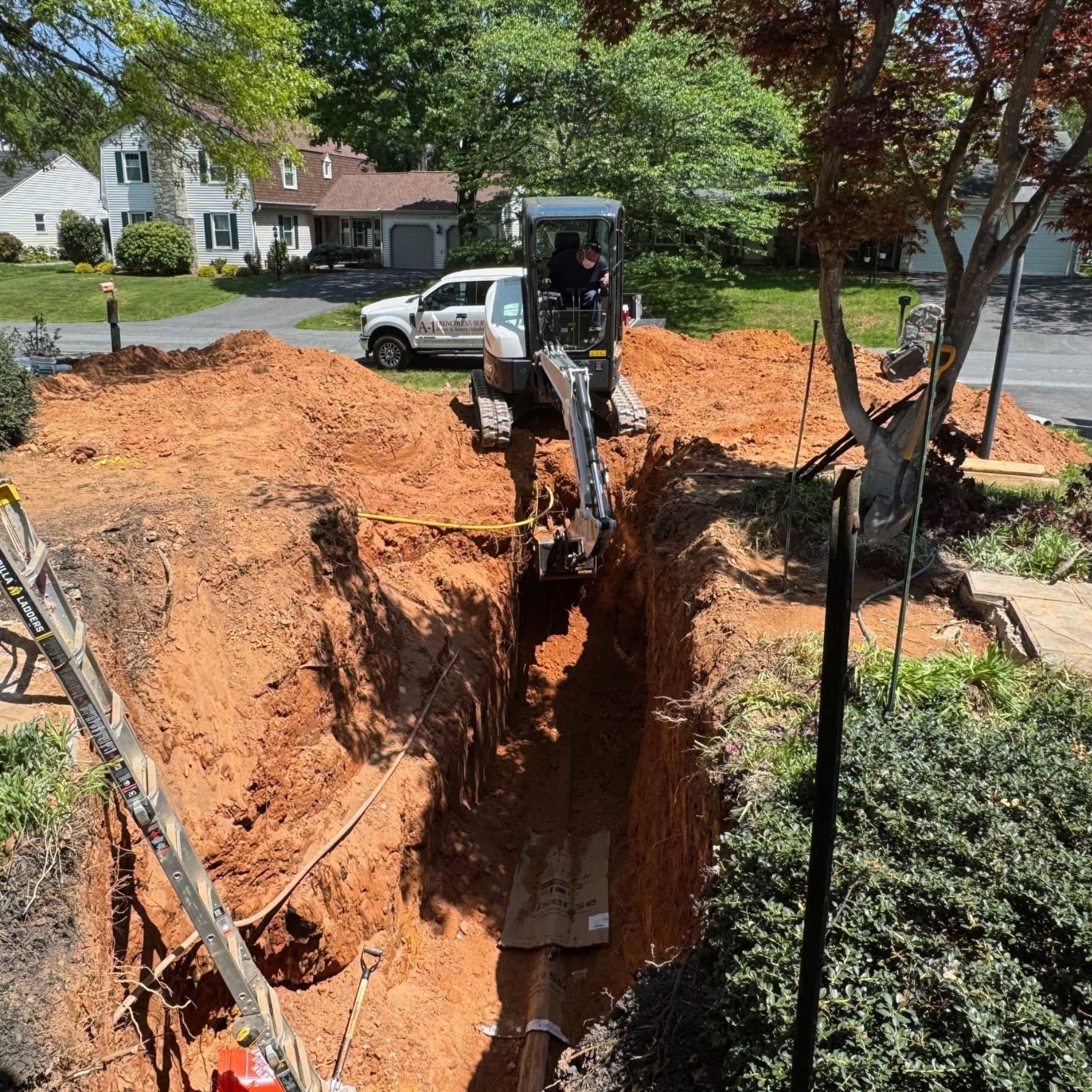
Waiting can increase water loss and allow the leak to undermine soil, damage foundations, or create moisture problems. Advanced leak detection and camera-based diagnostics help identify the problem without unnecessary digging. If the service line needs repair or replacement, trenchless methods may allow access with far less disruption to landscaping, walkways, and hardscaping than a full open trench.
Older Pipes Can Restrict Water From the Inside
A home can have pipes that are intact on the outside but badly restricted on the inside. Galvanized steel pipes are especially prone to rust and mineral accumulation. Over decades, corrosion can narrow the pipe’s interior diameter and steadily reduce water flow.
This problem usually develops gradually. Homeowners may not realize how much performance they have lost until a fixture is replaced, a new appliance is installed, or pressure becomes too weak to ignore. Rust-colored water, frequent pinhole leaks, and inconsistent pressure can all point to aging water piping.
Pipe descaling may improve flow in certain systems when buildup is the primary issue and the pipe material remains in suitable condition. In other cases, replacement is the better long-term investment. The right choice depends on the pipe material, its overall condition, the extent of corrosion, and whether leaks have already become recurring problems.
Do Not Overlook Water Filters and Treatment Equipment
Whole-house filters, softeners, and other water treatment equipment can reduce pressure when cartridges are clogged, media is exhausted, or bypass valves are not set correctly. This is often overlooked because the equipment is working quietly in a utility room, basement, or mechanical closet.
Check manufacturer maintenance schedules, but do not bypass or disconnect equipment without understanding the system. A professional can determine whether the treatment unit is causing the restriction or whether it is simply revealing an existing supply problem.
How a Professional Diagnoses Low Water Pressure
The fastest solution is rarely guessing at one part after another. A proper inspection starts by identifying whether the issue is isolated or building-wide, then comparing hot and cold water performance. A technician may test pressure at key points, inspect valves and regulators, check the meter for leak activity, and evaluate the condition of visible piping.
For suspected underground line issues, diagnostic equipment can narrow down the location before repair begins. This approach helps prevent unnecessary excavation and gives property owners a clearer explanation of what needs to be fixed, why it is happening, and what repair options make sense.
For Damascus-area homeowners and property managers, A-1 Trenchless Water & Sewer Repair Services LLC provides water line diagnostics and repair options designed to restore dependable service while protecting the property whenever possible. If low pressure is accompanied by a spike in water use, wet ground, or pressure that keeps getting worse, do not wait for a small restriction or leak to become a larger repair.
A weak stream at one faucet may only need cleaning. Pressure loss across the property, however, is your plumbing system asking for attention. Getting a clear diagnosis now can restore daily comfort and help protect the pipes, landscape, and building from more costly damage later.
First published . Written by the A-1 Trenchless team.