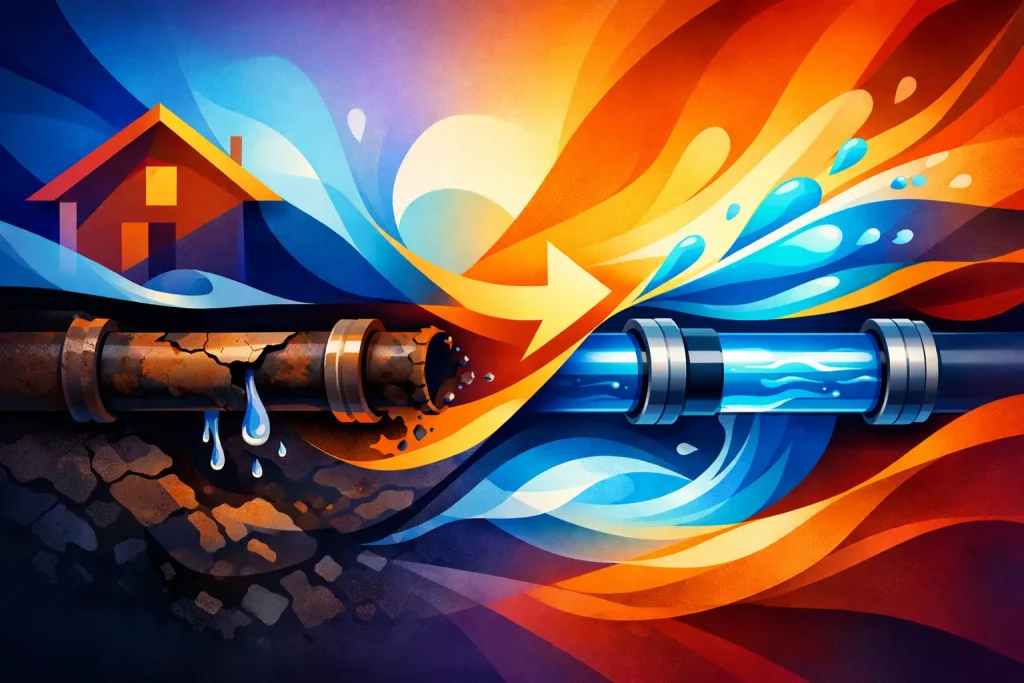
A sudden spike in your water bill, a soggy patch in the yard, or a drop in water pressure usually sends people to the same question fast: how much does it cost to fix a water line break? The honest answer is that pricing can vary quite a bit, but most property owners want to know the real range, what drives the cost up, and whether there is a less disruptive way to get the line fixed.
In most cases, fixing a water line break can cost anywhere from a few hundred dollars for a minor, exposed repair to several thousand for a buried line with difficult access, extensive damage, or full replacement needs. For many homeowners, the final number comes down to where the pipe is located, how severe the break is, what material the line is made of, and whether excavation is required.
How much does it cost to fix a water line break in real-world terms?
For a straightforward repair on a water service line, many jobs land somewhere between $1,500 and $4,000. If the break is easy to locate and access, the cost may stay on the lower end. If the line runs under a driveway, sidewalk, mature landscaping, or a deep section of the yard, the price can rise quickly.
When a line is badly deteriorated, has multiple weak points, or is made from older material that is failing in more than one place, replacement may be the smarter investment. Full water line replacement often falls in the range of $3,000 to $8,000 or more, depending on depth, length, pipe material, permit requirements, and restoration work after the repair.
That spread is wide for a reason. Underground plumbing work is not just about the pipe itself. It also involves diagnostics, labor, equipment, code compliance, site conditions, and restoring the property once the job is done.
What affects water line break repair cost?
The biggest factor is access. A broken line in open soil is usually less expensive to repair than one buried beneath concrete, asphalt, decks, retaining walls, or carefully maintained landscaping. The harder it is to reach the pipe, the more labor and equipment the job requires.
Depth also matters. A shallow line is generally faster to expose and repair. A deeper line may require more excavation, more time, and extra safety precautions. If groundwater, rocky soil, or tight working conditions are involved, that can add labor and slow the job down.
Pipe material plays a major role too. Some older galvanized or corroded lines may be repairable in one spot, but that does not always mean they should be. If the line is failing because of age or internal deterioration, patching one break can simply delay the next problem.
Then there is the extent of the damage. A clean split in one section is different from a line that has shifted, cracked in multiple areas, or suffered long-term wear. A localized repair is usually more affordable than replacing a long stretch of pipe.
Repair vs. replacement: which saves more?
This is where many property owners get stuck. A repair usually has the lower upfront cost, but replacement can be the better value when the line is old or unreliable.
If the break is isolated and the rest of the line is in good shape, repair often makes sense. You restore service, keep the work targeted, and avoid paying for more than you need. But if the pipe has a history of leaks, poor water quality, corrosion, or reduced flow, replacing the line may save money over time.
A professional inspection helps separate a one-time break from a line that is nearing the end of its service life. That matters because no one wants to pay for excavation twice.
How trenchless methods can change the price
Not every water line repair can be handled trenchlessly, but when trenchless methods are an option, they can change the overall cost picture in a good way. Traditional excavation may look cheaper at first if you compare pipe work alone. But once you add in replacing sections of driveway, sidewalk, sod, flower beds, or hardscaping, the total property impact can be much higher.
A trenchless or minimally invasive approach can reduce digging, shorten the timeline, and protect more of the yard. In some cases, that means a higher specialty-service price but a lower total project cost once restoration is considered. It also means less disruption to your home or facility.
That is one reason many homeowners and property managers ask for advanced diagnostics first. Camera inspections, leak detection, and accurate line locating help narrow the repair plan before major digging starts.
Hidden costs people do not always expect
When budgeting for a water line break, the pipe repair itself is only part of the equation. There may also be permit fees, utility locating, emergency service charges, backfill and cleanup, and repairs to concrete or asphalt surfaces.
If the leak has already caused secondary damage, you may also be dealing with wet crawl spaces, erosion, foundation concerns, or interior water intrusion. Those costs may be separate from the plumbing work.
Timing can affect cost as well. Emergency repair after hours, on weekends, or during severe weather may cost more than scheduled daytime work. Still, delaying a water line repair can make the problem more expensive if water loss continues or the break worsens.
Signs your water line problem may be serious
Some breaks are obvious. Others build slowly until the damage is harder to ignore. If you notice unexplained wet spots in the yard, muddy areas near the service line path, low water pressure, discolored water, or an unusual jump in your utility bill, it is worth having the line checked.
You may also hear water running when no fixtures are on, or notice cracks in pavement where the soil has shifted. For commercial properties and municipal settings, inconsistent pressure or recurring underground leaks can disrupt operations and create liability concerns.
The sooner the issue is diagnosed, the more likely you are to catch it before it turns into a larger excavation or replacement project.
Why accurate diagnosis matters before pricing
A reliable estimate starts with knowing exactly where the break is and what condition the rest of the line is in. Guesswork usually costs more in the end. If a contractor starts digging without proper locating or inspection, you can lose time and money chasing the wrong section of pipe.
That is why experienced underground plumbing specialists rely on diagnostic tools and field knowledge, not assumptions. A clear repair plan helps control labor, reduce property disruption, and give you a more honest price range.
For local property owners in and around Damascus, MD, working with a licensed and insured contractor that handles both conventional excavation and minimally invasive options can be especially valuable. It means the recommendation can be based on what actually fits the site, not just one method.
How to keep the cost of a water line break under control
If you suspect a problem, act early. Small leaks rarely stay small underground. Shut off water if the break appears severe, avoid using the system excessively, and schedule an inspection as soon as possible.
Ask whether the issue is a localized repair or a sign of a failing line. Ask what restoration work is included. Ask whether there is a trenchless or lower-impact option. And make sure the estimate explains the difference between repairing the immediate break and solving the root problem.
A trustworthy contractor should be able to explain the trade-offs clearly. The cheapest estimate is not always the lowest total cost if it leads to repeat failures or major property damage later.
The bottom line on water line break pricing
If you are trying to plan ahead, a minor repair may be manageable, while a complex underground break or full replacement can become a significant project. Most jobs fall somewhere in the middle, and the only way to price it accurately is to inspect the line, confirm the location of the damage, and understand site conditions.
At A-1 Trenchless Water & Sewer Repair Services LLC, that is the kind of situation where fast response, modern diagnostics, and practical repair options matter most. When the right team finds the problem quickly and recommends the right fix the first time, you have a much better chance of protecting both your property and your budget.
If your yard is wet, your pressure is dropping, or your bill suddenly makes no sense, the best next step is simple: get the line checked before a repairable problem turns into a much bigger one.