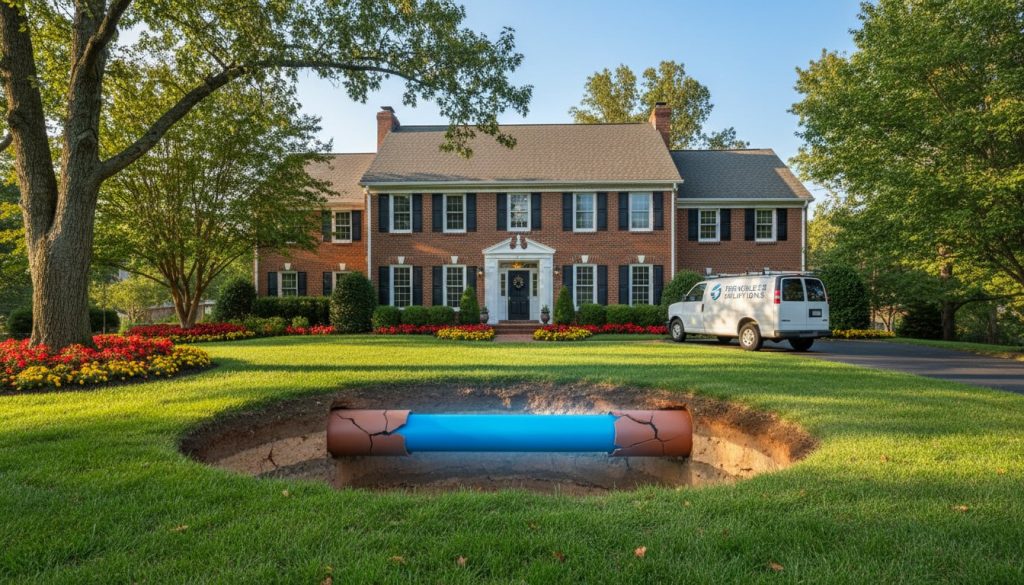
A sewer backup can feel sudden, but most sewer problems build up quietly inside the pipe long before wastewater reaches your tub, toilet, floor drain, or basement. Slow drains, bubbling toilets, bad smells, and recurring clogs are often early warnings that the main line needs attention. A sewer camera inspection gives homeowners a clear look inside the sewer line before a messy backup happens.
Since the sewer line is underground, guessing can lead to the wrong fix. A drain may be cleared today and clog again next month because the real issue is still deeper in the pipe. Roots, grease, cracks, offsets, scale, and collapsed sections can all restrict flow. Once the pipe cannot move wastewater properly, the home can be at risk for damage, cleanup costs, and major disruption.
A Backup Usually Starts Underground
Most sewer backups begin with a restriction inside the main line. Wastewater still moves at first, but it moves more slowly. Then debris begins to catch. Toilet paper, grease, soap residue, and solids can collect around roots, rough pipe walls, or low sections. Over time, the opening gets smaller until water has nowhere to go.
That is when symptoms appear indoors. A toilet may gurgle after the shower runs. Water may rise in a tub after the washing machine drains. A basement floor drain may smell bad or back up during heavy use. These signs usually point to a main sewer line issue, not a simple surface clog.
What the Camera Sees That You Cannot
A sewer camera is sent through the line to record the inside of the pipe. The footage can show pipe walls, flow restrictions, root intrusion, buildup, cracks, and the exact area where trouble begins. It can also help locate the problem from above ground, which makes any repair plan more targeted.
This matters because sewer repair should not be based on guesswork. If the issue is grease buildup, excavation would not make sense. If the line has a collapsed section, basic drain cleaning will not solve it. A sewer camera inspection can also explain why a clog keeps coming back. The camera can show if roots are growing into the line, pipe joints have shifted, or a low section is holding waste.
Seven Problems a Camera Can Reveal
A camera inspection can uncover several issues that are difficult to confirm from the surface:
- Tree roots entering through cracks, loose joints, or weak pipe sections
- Grease, sludge, and debris buildup that narrows the pipe opening
- Cracked or broken pipe walls that may worsen over time
- Offset joints where pipe sections no longer line up correctly
- Bellied pipe sections that hold standing water and waste
- Scale or corrosion that creates rough interior pipe surfaces
- Collapsed sections that stop flow and require repair or replacement
Each problem affects the sewer line differently. Roots may need clearing first, then repair if the entry point is serious. Grease and sludge may call for hydro jetting. Scale may need pipe descaling. Cracked or collapsed pipe may require repair or replacement.
Root Intrusion Can Quietly Take Over the Line
Tree roots are one of the most common hidden sewer line problems. Roots are drawn to moisture, and a small opening in the pipe can become an entry point. Once inside, roots grow into a web that catches waste and debris.
At first, the line may still drain. The homeowner may only notice occasional slow drains or a clog that seems easy to clear. As roots thicken, the pipe opening gets smaller. The clog comes back faster each time.
A camera inspection can show how severe the root intrusion is and where it entered the pipe. Cutting roots may restore flow temporarily, but the opening may still remain. If the damaged section is not addressed, roots can grow back and restart the same problem.
Buildup and Pipe Damage Need Different Fixes
Not every sewer problem is caused by broken pipe. Some lines become restricted because material builds up inside. Grease can cool, harden, and cling to pipe walls. Soap residue, food particles, sediment, sludge, and scale can add to the buildup.
A sewer camera inspection can show the difference between buildup and structural damage. If the pipe is still in good condition, cleaning methods may be enough to restore flow. If buildup is connected to damaged or rough pipe walls, additional service may be needed to keep the problem from returning.
When to Schedule an Inspection
Some drain issues can wait for routine service, but repeated or widespread symptoms deserve faster attention. The main line may be involved if several fixtures act up at once.
Schedule an inspection if you notice:
- Multiple drains slowing down at the same time
- Toilets bubbling, gurgling, or backing up
- Water backing up into a tub, shower, or floor drain
- Sewage odors inside the home or near the yard
- Clogs that return soon after drain cleaning
- Wet, sunken, or unusually green areas in the lawn
An inspection is also smart before buying an older home, after major landscaping work, or before installing hardscaping over a sewer line area.
Video Footage Helps You Choose the Right Fix
The best repair plan starts with knowing the cause. Camera footage can show if the line needs hydro jetting, pipe descaling, drain cleaning, repair, or replacement. It can also help determine if trenchless repair is possible.
This is helpful for homeowners who want to avoid unnecessary digging. If the pipe can be repaired with a less invasive method, the inspection helps confirm that. If excavation is needed, the footage can help narrow the work area instead of disturbing more of the property than necessary.
Find the Problem Before It Becomes a Backup
A sewer backup can damage floors, walls, furniture, stored items, and finished basement spaces. It can also create odor and sanitation concerns that are difficult to handle without professional cleanup. Finding the cause early is the smarter path.
A sewer camera inspection can reveal hidden roots, cracks, grease, offsets, scale, and collapsed pipe before wastewater backs up into the home. If your drains keep slowing down or the same clog keeps returning, A-1 Trenchless Water & Sewer Repair Services can inspect the line, identify the issue, and recommend the right service. Their team provides video inspections, drain cleaning, hydro jetting, pipe descaling, sewer line repair and replacement, and trenchless sewer repair and replacement for homeowners and businesses that want answers before the damage spreads.