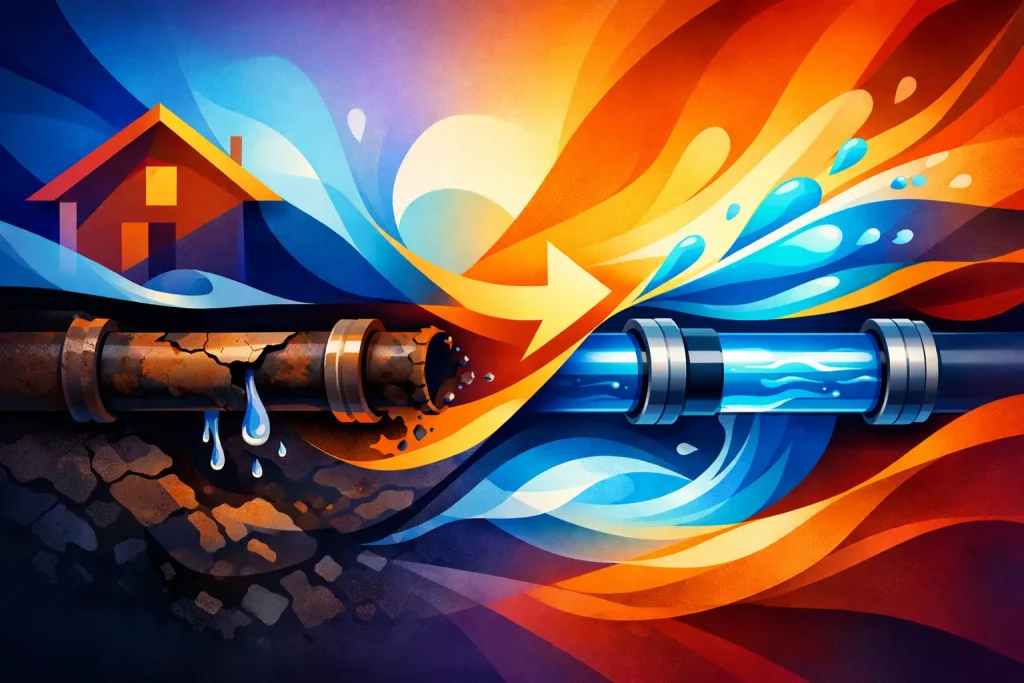
A sudden spike in your water bill, soggy patches in the yard, or a drop in water pressure usually leads to one question fast – what is the water line repair cost going to be? The honest answer is that pricing can vary quite a bit, because no two underground water line problems are exactly the same. What matters most is getting a clear diagnosis first, so you know whether you are dealing with a small repair, a major section failure, or a full replacement.
What affects water line repair cost?
The biggest factor in water line repair cost is the condition of the pipe itself. A simple leak in an accessible section may cost far less than a line that has multiple cracks, heavy corrosion, root intrusion, or a collapse. If the pipe is failing in more than one place, repairing one spot may only buy you a little time before another issue shows up.
Pipe material also matters. Older galvanized steel and aging copper lines often create different repair challenges than newer plastic piping. Some materials are easier to patch or reconnect, while others are more likely to justify replacement instead of repeated repairs. If your water service line is decades old, the repair decision is rarely just about today’s leak. It is also about how much life the line has left.
Location changes the price as well. A line running under open soil is usually easier to reach than one buried beneath a driveway, sidewalk, patio, retaining wall, or landscaped area. The more demolition and restoration involved, the higher the total project cost tends to be. That is one reason advanced diagnostic equipment matters. Accurate locating helps reduce guesswork and unnecessary digging.
Depth is another major pricing factor. A shallow line is faster and simpler to access than one buried deep below grade. In some cases, utility conflicts, soil conditions, groundwater, or limited site access can increase labor time and equipment needs. Those site-specific details are often what separate a straightforward repair from a more involved underground job.
Repair versus replacement
One of the most common concerns homeowners have is whether they really need a repair or if they are being pushed toward replacement. A reputable contractor should explain why one option makes more sense than the other.
If the damage is isolated and the rest of the pipe is in good shape, a spot repair may be the most cost-effective path. This is often true when the issue is caught early and the line has not suffered widespread deterioration. In that case, repairing only the damaged section can restore service without taking on the cost of a full line replacement.
If the pipe has recurring leaks, visible corrosion, age-related wear, or widespread damage, replacement may save money over time. Paying for multiple repairs on a failing line can add up quickly, especially if each problem requires excavation and restoration. In that situation, the lower upfront option is not always the better value.
How trenchless methods can change the cost
Trenchless technology does not automatically mean the cheapest estimate, but it often changes the overall value of the job. Traditional excavation may have a lower repair price in some cases, yet that number can leave out the real cost of restoring a torn-up lawn, driveway, walkway, or commercial surface.
Trenchless repair or replacement is designed to minimize disruption. When a property owner wants to protect landscaping, hardscaping, or site access, trenchless methods can make a lot of financial sense. The direct plumbing cost may be comparable to or slightly higher than conventional digging, but the total impact on the property is often lower.
That trade-off matters for both homeowners and commercial properties. A repair that preserves a front yard, parking area, or entry access can reduce inconvenience and shorten the timeline. For many customers, that is worth serious consideration when comparing options.
Typical cost ranges and why estimates vary
A small water line repair may fall in the hundreds to low thousands, while larger repairs and replacements can move well beyond that. The reason broad online averages are often frustrating is simple – they cannot account for your pipe material, site conditions, access, depth, permit requirements, or the extent of damage.
For example, a localized repair near the meter or in an exposed area is very different from a line failure running under a driveway and mature landscaping. Both are called water line repairs, but they are not the same job. That is why a phone quote without inspection is often little more than a guess.
A professional estimate should reflect the actual scope of work. That usually includes diagnosis, excavation or access method, pipe repair or replacement materials, labor, equipment, testing, and any surface restoration that is part of the job. If permits are required, those may also affect the final price.
Signs that can increase water line repair cost
The longer a leak goes unaddressed, the more likely it is to turn into a larger and more expensive problem. A minor issue can become a major excavation if water undermines soil, damages pavement, or creates ongoing pressure loss in the system.
Watch for warning signs such as unusually high water bills, wet spots in the yard, pooling water near the foundation, discolored water, low pressure, or the sound of running water when fixtures are off. These symptoms do not always point to the same cause, but they are strong reasons to schedule an inspection before the damage spreads.
Delays can also complicate repairs if emergency conditions develop. Once a line fully breaks, service disruption becomes the immediate issue, and emergency response may narrow your options. Planning a repair after a clear diagnosis is almost always easier than reacting to a full failure.
Why diagnosis matters before pricing
The most dependable way to understand water line repair cost is to start with accurate testing and locating. Underground pipe problems are not always visible from the surface, and symptoms can overlap with other plumbing issues. Low pressure, for example, may be caused by a leak, a valve problem, internal pipe buildup, or a municipal supply issue.
An experienced contractor should use the right tools to identify where the problem is, how severe it is, and whether the line is a good candidate for repair or replacement. That kind of diagnostic work protects you from paying for unnecessary excavation or temporary fixes that do not address the real problem.
Clear communication matters here. You should know what was found, what options are available, what the likely lifespan of each solution is, and what level of property disruption to expect. Good contractors do not just present a number. They explain what that number covers and why.
Cost concerns beyond the pipe itself
When property owners think about water line repair cost, they often focus only on the pipe work. In reality, the total job may involve more than repairing the line. Surface restoration, access limitations, utility coordination, permit requirements, and emergency scheduling can all affect the final bill.
There is also the cost of waiting. Ongoing leaks waste water every day and can raise utility bills substantially over time. In some cases, hidden water line issues can also contribute to soil erosion or moisture problems around the property. Fixing the line promptly can prevent those secondary costs from growing.
That is where financing can help. For urgent underground repairs, many customers need a practical way to move forward without delaying necessary work. Flexible payment options can make the decision easier, especially when the alternative is letting a water line issue become more disruptive and more expensive.
Choosing the right contractor for the job
Price matters, but so does the quality of the diagnosis and repair plan. A low estimate is not a bargain if it overlooks key site conditions, uses inferior materials, or leads to repeat work. Underground utilities are too important to treat as a quick patch job without understanding the bigger picture.
Look for a licensed and insured contractor with direct experience in underground water line work, modern diagnostic equipment, and both trenchless and conventional repair capabilities. That range matters because the best solution should fit your property, not the contractor’s limited toolbox.
For homeowners and property managers in the Damascus area, working with a local specialist like A-1 Trenchless Water & Sewer Repair Services LLC can make the process more straightforward. Fast response, honest recommendations, and minimally invasive options go a long way when you are dealing with a buried line problem that cannot wait.
If you are trying to budget for a suspected water line issue, the best next step is not chasing generic internet averages. It is getting the line inspected, understanding the real cause, and choosing the fix that protects both your property and your long-term costs.